


Table of Contents
An ankle sprain can happen in an instant. You might step off a curb, land awkwardly during sports, or lose your footing on uneven ground. The result is often pain, swelling, and difficulty walking that can disrupt your daily routine.
Without proper treatment, some sprains may lead to ongoing instability and repeat injuries. Early evaluation can help prevent complications and support a smoother recovery.
At Resilience Orthopedics, we assess your injury and create a treatment plan to reduce pain, restore stability, and help you get back to the activities you enjoy.
Book a Consultation with Dr. Pamela Mehta, MD
The Best Orthopedic Surgeon in San Jose
Dr. Mehta is a board-certified orthopedic surgeon who can help you recover from your joint condition. If you:
- Are Suffering From Pain and Mobility Issues
- Need Orthopedic Assessment and Advice
- Want Treatment From a Top Orthopedic Doctor
We Can Help
An ankle sprain happens when the ligaments that support the ankle joint are stretched or torn. This usually occurs when the foot twists or rolls inward. It’s a common sports injury, on uneven ground, or after a simple misstep.
Ankle sprains can range from mild stretching of the ligaments to a complete tear. Most people notice the following symptoms shortly after the injury:
- Pain, especially when bearing weight
- Swelling and bruising around the ankle
- Tenderness
- A feeling of instability or that the ankle may give way
- Reduced range of motion
What is an Ankle Sprain?
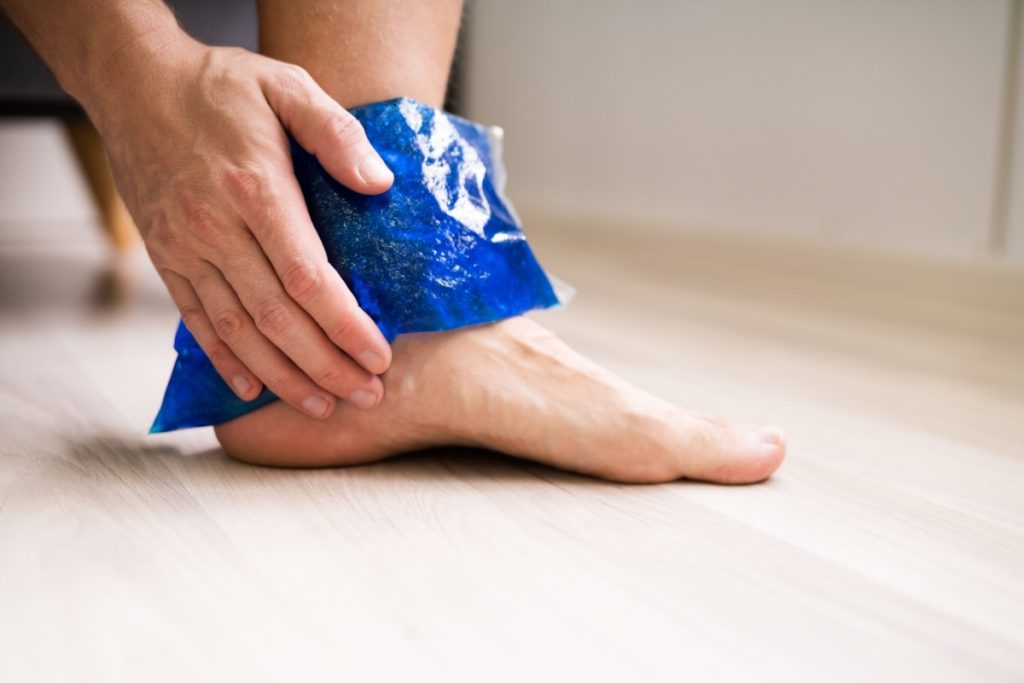
Mild sprains may improve with rest and basic care. More severe sprains, or those that do not improve within a few days, should be evaluated. This helps rule out a more serious ligament injury or an associated fracture.
How We Treat Ankle Sprains at Resilience Orthopedics
First Appointment
During your first visit, we review your symptoms, how the injury happened, and how it affects your movement and daily life.
Dr. Pamela Mehta and her team may take an X-ray during your visit unless you already have recent imaging. If the injury looks more serious, an MRI may be recommended to assess the ligaments.
Personalized Treatment Plan
Once we understand your injury, we create a non-surgical treatment plan when appropriate.
This may include:
- Physical therapy to rebuild strength and stability
- Bracing to support the ankle during healing
- Anti-inflammatory medication to reduce pain and swelling
- Activity changes to allow proper healing
For persistent joint discomfort after an ankle sprain, hyaluronic acid joint injections can help restore cushioning and reduce long-term irritation in the ankle joint. For patients with significant inflammation, cortisone shots can provide targeted, fast-acting relief to support your recovery plan. Most ankle sprains heal well without surgery. If instability persists, we will discuss next steps with you.

Recovery and Rehabilitation
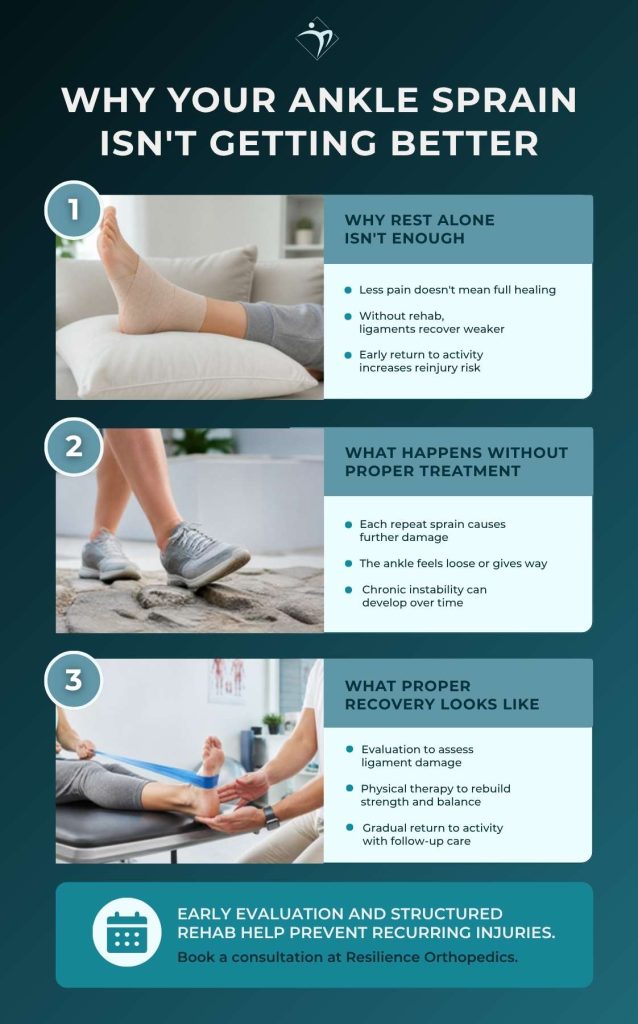
Recovery time depends on the severity of the sprain. Mild sprains may improve within a few weeks. More severe injuries can take several months to fully heal.
Physical therapy is an important part of your recovery. It helps restore strength, improve balance, and lower the risk of reinjury. We guide you through each stage of healing, and follow-up visits allow us to monitor your progress.
Some patients find that altered walking patterns during ankle sprain recovery can place extra stress on the foot. If you develop heel or arch pain, plantar fasciitis is a common related condition we also treat.
Why Choose Resilience Orthopedics for Ankle Sprain Treatment
- Personalized Care: Dr. Mehta tailors your treatment to your injury, activity level, and goals. We focus on non-surgical care first and build a plan that fits your life.
- Accurate diagnosis: Sprains vary in severity. We perform a detailed exam and use imaging when needed to check for ligament damage or fractures.
- Convenient access: With locations in Los Gatos and San Jose, care is close to home. Our goal is to help you regain stability and return to your normal activities.
- Continuity of care: Dr. Mehta sees you from first visit through recovery. This keeps your care consistent and informed. Recovery support continues for 90 days after your procedure, including follow-ups and imaging, with no additional visit charges during that period.
FAQs
What Happens When I Book a Consultation?
After you book your consultation, Dr. Mehta will examine your ankle and review any imaging if needed. She will explain your diagnosis and outline a clear treatment plan. You will leave knowing what is going on, what to do next, and the expected cost. You can then decide how you would like to move forward.
How Do I Know If My Ankle Sprain is Serious?
If you cannot bear weight, have swelling, or your pain has not improved after a few days, you should be evaluated. Severe sprains may involve ligament tears that require more than rest alone.
Can an Ankle Sprain Heal on Its Own?
Mild sprains often improve with rest. Without rehab, the ankle may stay weak and more prone to reinjury. Guided recovery helps rebuild strength and stability.
How Long Does It Take for an Ankle Sprain to Heal?
Mild sprains usually heal in two to four weeks. Moderate to severe sprains can take six to twelve weeks or longer, depending on the injury and your recovery plan.
Do Ankle Sprains Require Surgery?
Most do not. Surgery is only considered for severe tears that do not respond to non-surgical treatment or for ongoing instability after repeated sprains.
What is Chronic Ankle Instability?
Chronic ankle instability is when the ankle keeps giving way after repeated sprains. It usually happens when ligaments do not heal fully or strength and balance are not restored. Early treatment can help prevent it.
Falls and sports incidents that cause ankle sprains can sometimes injure multiple joints at once. If you also have knee symptoms, learn about knee sprain treatment and how we approach combined lower extremity injuries.