


Table of Contents
MCL pain often starts as a dull ache on the inside of the knee, but can make bending, straightening, and simple movement painful.
Common in athletes and anyone who twists or takes a blow to the outside of the knee, it can worsen over time and lead to lasting instability or ligament damage.
If knee pain is getting in the way, Dr. Pamela Mehta at Resilience Orthopedics can confirm exactly what’s torn and how far, so you’re working from a diagnosis rather than a worry.
Book a Consultation with Dr. Pamela Mehta, MD
The Best Orthopedic Surgeon in San Jose
Dr. Mehta is a board-certified orthopedic surgeon who can help you recover from your joint condition. If you:
- Are Suffering From Pain and Mobility Issues
- Need Orthopedic Assessment and Advice
- Want Treatment From a Top Orthopedic Doctor
We Can Help
What is an MCL Tear?
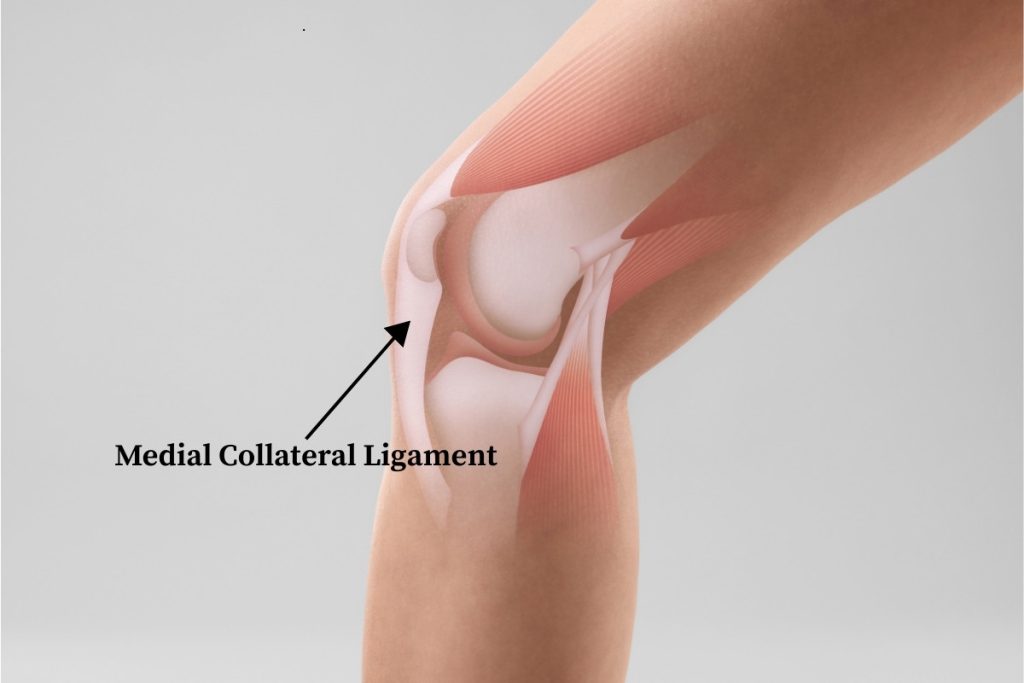
An MCL tear occurs when the ligament running down the inner side of the knee becomes stretched or torn.
It’s closely related to other knee ligament injuries, including LCL tears, ACL tears, and general knee sprains.
Common causes include:
- A blow to the outside of the knee
- Twisting movements during sports
- Sudden changes in direction
- Falls or awkward landings
- Repetitive stress on the knee
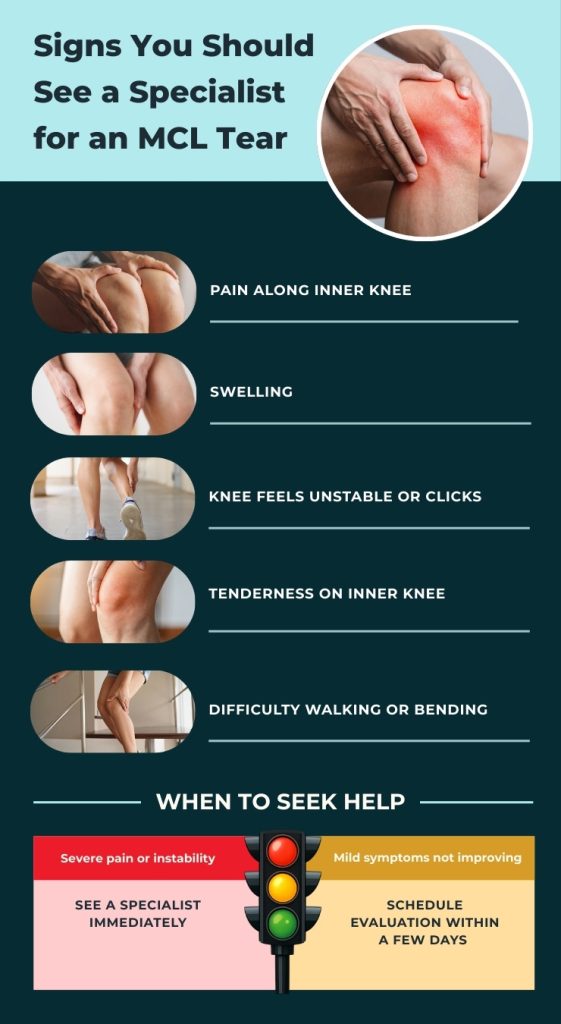
Symptoms may include pain, swelling, tenderness, a feeling of instability, and pain with bending or straightening the knee.
Does an MCL Tear Need Surgery?
Usually not. Even a fully torn MCL heals well in most cases, because the ligament has a good blood supply and responds well to bracing and rehab.
Surgery is mainly considered when the MCL tear happens alongside a more significant injury – most often the ACL. In that situation, it’s typically the other ligament driving the decision to operate, not the MCL itself.
How We Treat MCL Tears at Resilience Orthopedics
Your First Appointment
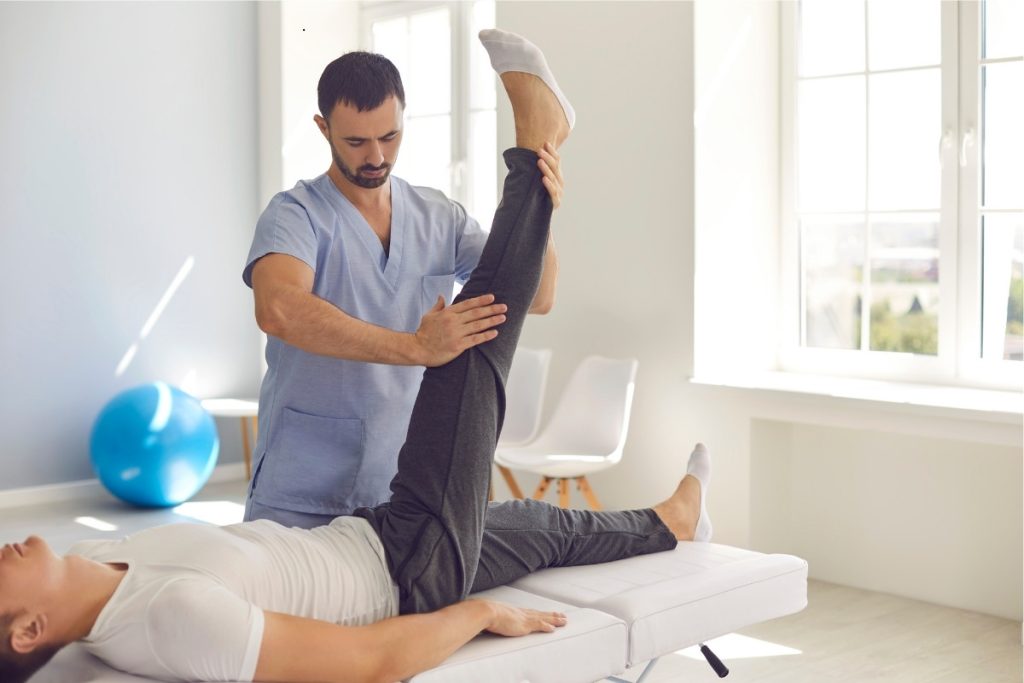
Dr. Mehta will ask how the injury happened – a blow to the outside of the knee points strongly to the MCL, as does a twisting motion. She’ll test the ligament’s stability directly.
MRI isn’t always necessary for a straightforward MCL tear, but is used when there’s a suspicion of a combined injury, particularly involving the ACL.
Your Personalized Treatment Plan
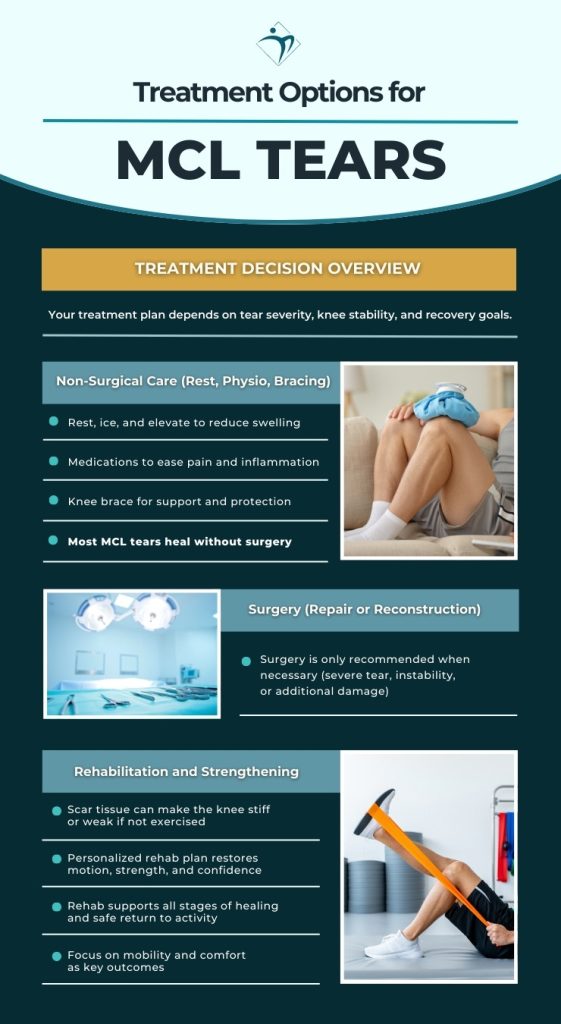
Bracing and a structured rehab program are the default here, even for complete tears – this is what gives the MCL the best chance to heal on its own.
Surgery is reserved for cases where the MCL is torn alongside another major ligament. In those cases, Dr. Mehta will walk you through what’s actually being repaired and why.
Recovery
Recovery generally takes four to eight weeks depending on grade. Rather than working to a fixed date, Dr. Mehta guides your return to full activity based on your knee’s actual strength and stability – since returning to twisting or pivoting sports too early is the most common cause of a setback.
Why Choose Resilience Orthopedics for MCL Tear Treatment
- The same surgeon throughout, from diagnosis to full return to activity.
- A confirmed diagnosis, not a guess based on where it hurts.
- Surgery only when it’s genuinely needed — most MCL tears here are treated without one.
- Checked for combined injuries, particularly the ACL, so nothing gets missed.
Your knee deserves focused, expert care. Schedule a consultation with Dr. Mehta and begin with a treatment plan designed around what matters most to you.
Can an MCL Tear Heal on Its Own?
In most cases, yes – even complete tears, thanks to the ligament’s strong blood supply. Bracing and rehab are usually all that’s needed.
How Long Does an MCL Tear Take to Heal?
Typically four to eight weeks depending on the grade, with a staged return to full activity based on strength rather than the calendar.
Why Does the Inside of My Knee Hurt When I Bend It?
This is one of the more common signs of MCL irritation or a partial tear, especially if it’s worse with bending, straightening, or twisting. It doesn’t always follow an obvious injury – a proper exam is the fastest way to know what’s actually going on.