


Table of Contents
Is your knee pain keeping you from running, hiking, or even climbing the stairs? At Resilience Orthopedics, we know how frustrating it is when pain limits your daily life.
Dr. Pamela Mehta designs personalized treatment plans, so you can return to your favorite activities and daily routine without constant discomfort.
Book a Consultation with Dr. Pamela Mehta, MD
The Best Orthopedic Surgeon in San Jose
Dr. Mehta is a board-certified orthopedic surgeon who can help you recover from your joint condition. If you:
- Are Suffering From Pain and Mobility Issues
- Need Orthopedic Assessment and Advice
- Want Treatment From a Top Orthopedic Doctor
We Can Help
What is Runner’s Knee (Patellofemoral Pain Syndrome)?
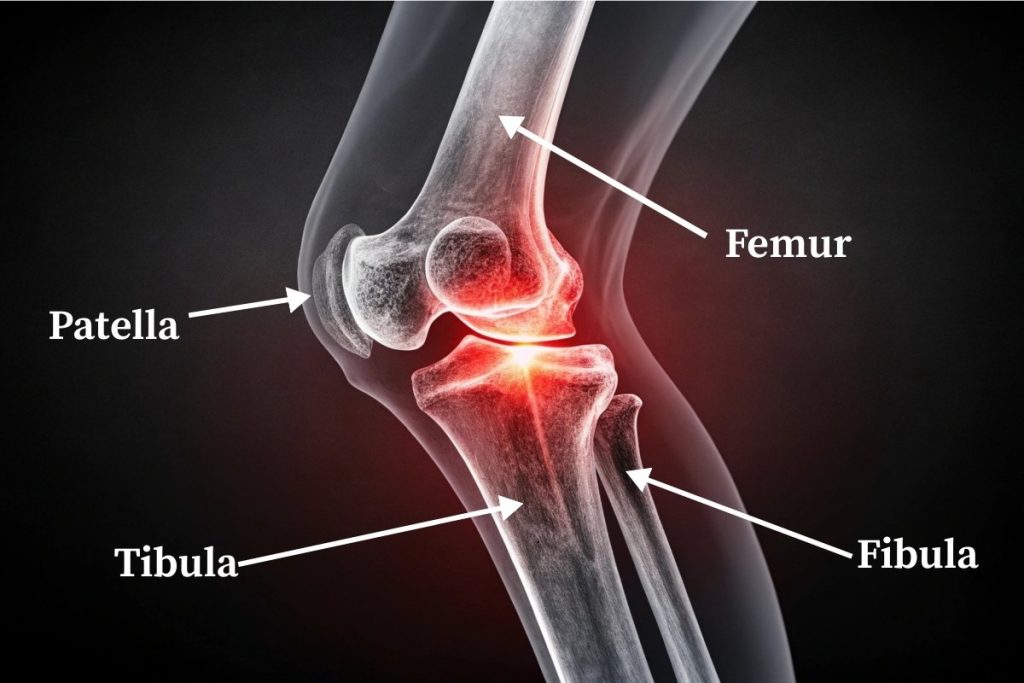
Runner’s knee, or patellofemoral pain syndrome (PFPS), causes pain at the front of the knee where the kneecap meets the thigh bone. In cases where the cartilage under the kneecap has softened or deteriorated, the condition is called chondromalacia patella. Runner’s knee is common in active people in Los Gatos and San Jose who run, walk, hike, or squat regularly.
The pain occurs when the kneecap isn’t moving smoothly, leading to irritation and reduced movement over time.
Do I Have Runner’s Knee?
Runner’s knee usually causes a dull ache around or behind the kneecap that worsens with activity, such as running, squatting, or prolonged sitting.
You may also notice:
- Knee stiffness
- Clicking or grinding sound during movement
- Pain when pressing on the kneecap
Because PFPS can resemble other knee conditions like patellar tendon tear or patellar tendonitis, it’s important to visit your doctor for an accurate diagnosis and proper treatment.

When Should I See a Doctor?
You should see a doctor if your knee pain:
- Persists for more than a week despite rest and ice
- Interferes with daily activities
- Is accompanied by swelling, locking sensation, or trouble walking
At Resilience Orthopedics, Dr. Pamela Mehta examines your knee to rule out issues like meniscus or ligament injuries. She’ll also guide you toward a treatment plan that gets you moving comfortably again.
Treatment for Patellofemoral Pain Syndrome
PFPS often responds well to a combination of rest, strengthening, activity adjustment, and medical care:
Self Care
Most active people notice improvement with simple self-care steps like:
- Rest from activities that cause pain
- Icing after workouts
- Compression and elevation
- Modifying activities to avoid pain triggers
- Gentle exercises to engage your quads, hips, and glutes
Medical Treatment
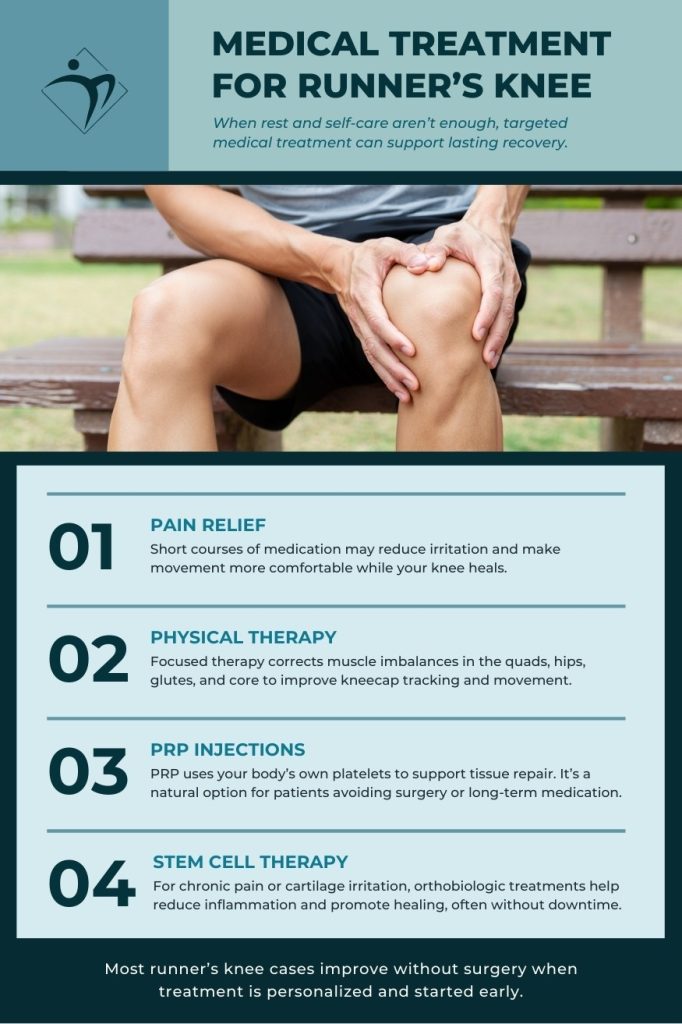
When self-care isn’t enough, medical treatment may provide the support your knee needs for lasting recovery.
Your plan may include:
- Pain relief medications: Short courses of medication may reduce irritation and allow you to move without irritating your knee particularly helpful for inflammatory conditions like knee synovitis.
- Physical therapy: PFPS often occurs due to imbalances in the quads, glutes, hips, or core. Therapy focuses on correcting movement patterns that overload the front of the knee.
- Platelet-rich plasma (PRP) injections: PRP uses concentrated platelets from your own blood to boost tissue repair. It’s a natural option for those who want to avoid medications or surgery.
- Stem cell treatments: For chronic PFPS or cartilage irritation, stem cell therapy helps reduce inflammation and promote healing, often without downtime.
When is Surgery Necessary?
Surgery is rarely needed for runner’s knee. Dr. Mehta may consider surgical options, such as arthroscopy for serious conditions like a patellar tendon rupture. This is only considered after conservative care hasn’t provided relief.
This usually means:
- 6 to 12 months of consistent treatment without any improvement
- Imaging that shows severe cartilage damage or specific structural problems

Why Choose Resilience Orthopedics for Your Care?
At Resilience Orthopedics, Dr. Pamela Mehta focuses on getting to the bottom of your knee pain. Your treatment plan is tailored to how knee pain affects your daily life, training, and long-term goals.
We work closely with physical therapists in Los Gatos and the South Bay to address how your movement patterns may be contributing to your knee pain.
When physical therapy isn’t enough on its own, you also have access to advanced orthobiologic treatments directly in our clinic.
If your knee pain hasn’t improved, a one-on-one consultation with Dr. Mehta can help you understand what’s causing it and what to do next.
FAQs
Most people find relief through targeted strengthening exercises, modifying activities, and physical therapy. If pain persists, advanced treatments such as PRP or stem cell therapy may support a faster recovery.
Runner’s knee can be caused by several factors, including overuse, weak hip or thigh muscles, flat feet, cartilage irritation, improper running form, misalignment of the hips or feet, and sudden increase in activity.
Runner’s knee may improve with rest and simple home care. However, if pain lingers or interferes with daily activities, a medical evaluation can help prevent long-term issues and chronic knee discomfort.