
Table of Contents
Does your knee still feel tight weeks into recovery? Maybe it’s difficult to bend, feels stiff when you stand up, or swells by the end of the day. Even simple movements may trigger a dull, persistent ache.
These symptoms may be more than just normal post-surgical stiffness or lingering discomfort after an injury. In some cases, they can be caused by knee arthrofibrosis (knee adhesions), where excess scar tissue restricts movement and limits recovery.
At Resilience Orthopedics, Dr. Pamela Mehta evaluates the source of your symptoms to create a targeted treatment plan focused on restoring movement.
Book a Consultation with Dr. Pamela Mehta, MD
The Best Orthopedic Surgeon in San Jose
Dr. Mehta is a board-certified orthopedic surgeon who can help you recover from your joint condition. If you:
- Are Suffering From Pain and Mobility Issues
- Need Orthopedic Assessment and Advice
- Want Treatment From a Top Orthopedic Doctor
We Can Help
What is Knee Arthrofibrosis?
Knee arthrofibrosis is a condition in which excess scar tissue forms inside the knee joint, causing stiffness and limiting movement. This process often involves inflammation of the joint lining, similar to knee synovitis, though arthrofibrosis specifically involves excessive fibrosis or scarring.
It often develops after:
- Knee surgery (such as ACL reconstruction or knee replacement).
- Trauma or injury
- Prolonged immobility or not following a rehabilitation program
As scar tissue builds up, the knee loses its normal smooth movement. Over time, bending and straightening the knee become difficult and uncomfortable.
Symptoms
This change in movement often shows up through a few common symptoms:
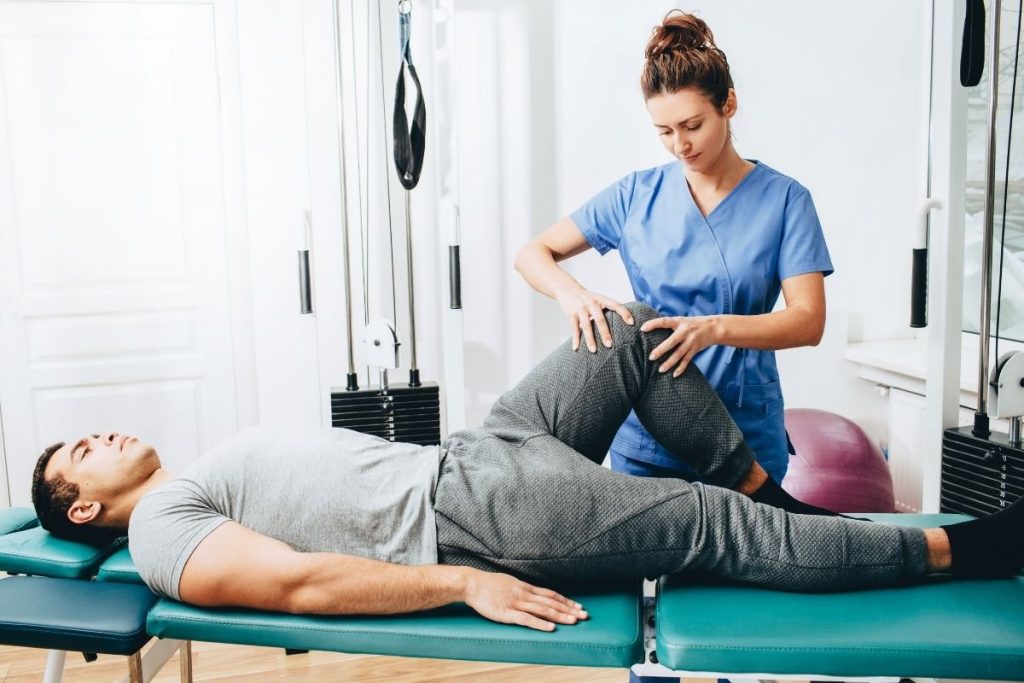
- Ongoing stiffness and pain in the knee, especially when trying to bend or straighten it
- Swelling that lingers or keeps coming back
- A sense of tightness or “blocked” movement inside the joint
- A gradual loss of range of motion
- Difficulty with everyday activities like walking, climbing stairs, or standing up

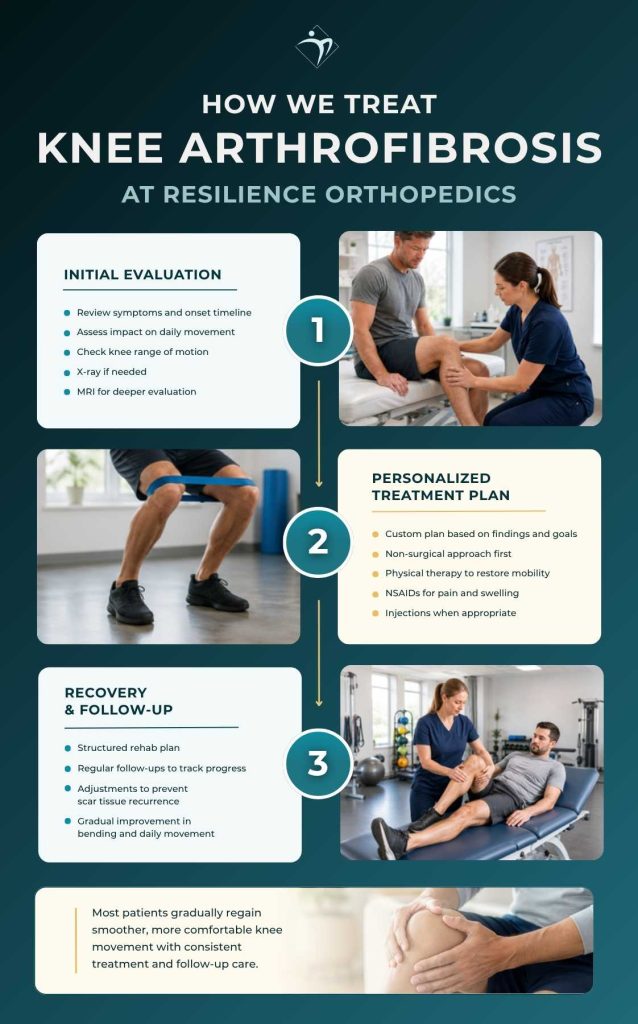
How We Treat Knee Arthrofibrosis at Resilience Orthopedics
We know how frustrating it can feel when your knee doesn’t move the way it should. Dr. Mehta works with you at every stage, focusing on steady recovery.
Initial Evaluation
During your first visit, Dr. Mehta will:
- Review your symptoms and when they started
- Understand how stiffness affects your daily life
- Check your knee’s range of motion
- Order an X-ray (if you don’t already have a recent one)
- Recommend an MRI if a deeper assessment is needed
Personalized Treatment Plan
Once the evaluation is complete, she creates a plan tailored to your needs and recovery goals. Dr. Mehta prioritizes non-surgical treatment first, which may include:
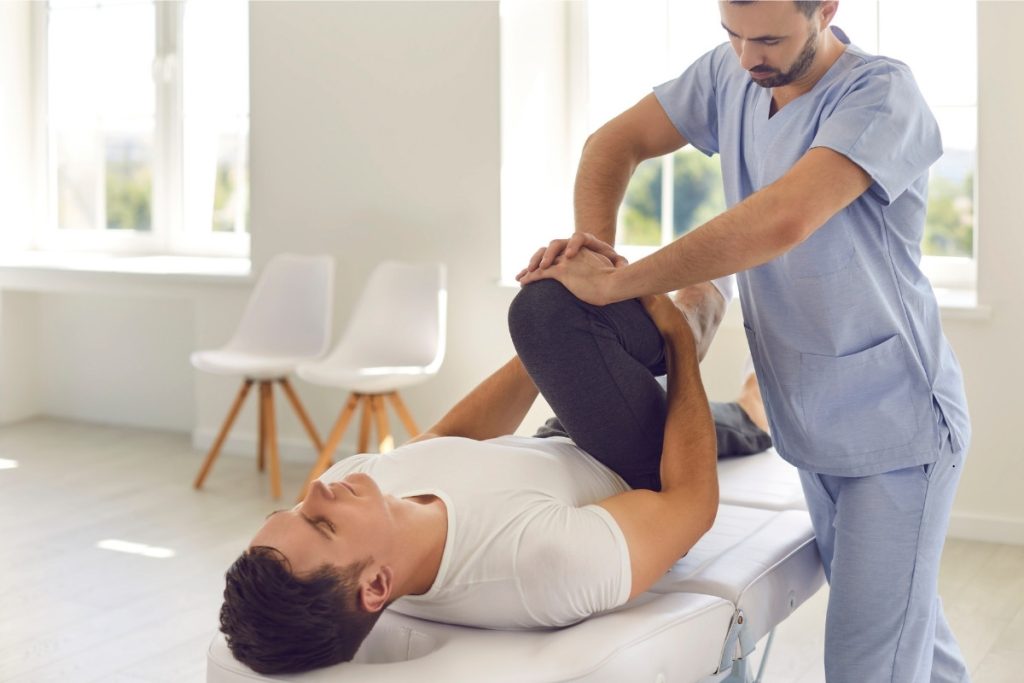
- Targeted physical therapy to restore mobility
- Anti-inflammatory medications (NSAIDs) to reduce pain and swelling
- Joint injections, when appropriate, to reduce stiffness
Recovery and Follow-Up
To support long-term recovery, Dr. Mehta offers:
- A structured rehabilitation plan
- Regular follow-ups to track progress
- Ongoing adjustments to prevent scar tissue from returning
Most people gradually notice their knee bending more easily and everyday movement becomes less restricted.
Why Choose Resilience Orthopedics for Knee Arthrofibrosis Treatment
At Resilience Orthopedics, we focus on clear answers and a structured path forward with Dr. Mehta guiding your care. Here’s what we offer:
- Personalized evaluation: We assess your symptoms and recovery stage before planning the next step.
- Clear diagnosis: A focused exam, with X-rays or MRI when needed, to identify the exact cause of stiffness.
- Goal-focused care: Your treatment is designed around your mobility goals and current knee condition.
- Early movement focus: We prioritize restoring movement early to help prevent long-term stiffness.
- Step-by-step guidance: You’re given clear, simple instructions at every stage so you always know what to do next.
FAQs
Is Knee Arthrofibrosis Common After Surgery?
Knee arthrofibrosis can happen after procedures like ACL reconstruction or knee replacement. While it’s not common, it is a known complication.
It usually develops when inflammation persists or when rehabilitation is delayed.
How Long Does Recovery Take?
Recovery depends on how early knee arthrofibrosis is identified and how stiff the knee has become. Some people regain movement within weeks with the right treatment, while others need a few months of structured rehabilitation.
Early attention and consistent movement make the biggest difference in recovery.
What Exercises Help Knee Arthrofibrosis?
The focus is on steady, gentle movement rather than pushing through pain. Range-of-motion exercises, light stretching, and gradual strengthening around the knee are often the most helpful.
Working with a physical therapist can also help you improve movement safely without making stiffness worse.
Can Knee Arthrofibrosis Go Away On Its Own?
Mild stiffness may improve over time with regular movement, but knee arthrofibrosis often needs guided treatment to fully improve.
Without it, stiffness can persist or gradually worsen, making movement more limited over time.
Can This Affect Long-Term Knee Movement?
Yes, especially if it isn’t addressed early. Over time, stiffness can become more difficult to reverse.
With timely treatment, most people can regain comfortable movement and use their knee normally again.