
Table of Contents
Shoulder pain can develop gradually or start after a specific strain or injury. Many people notice swelling, stiffness, and discomfort that make simple movements, like lifting, reaching, or even sleeping, uncomfortable.
These symptoms can disrupt your daily routine and affect your overall quality of life. One often overlooked cause is shoulder synovitis, an inflammation of the joint.
At Resilience Orthopedics, we work with you to identify the source of your pain. We then guide you toward effective, non-surgical treatment options that align with your recovery goals.
Book a Consultation with Dr. Pamela Mehta, MD
The Best Orthopedic Surgeon in San Jose
Dr. Mehta is a board-certified orthopedic surgeon who can help you recover from your joint condition. If you:
- Are Suffering From Pain and Mobility Issues
- Need Orthopedic Assessment and Advice
- Want Treatment From a Top Orthopedic Doctor
We Can Help
What is Shoulder Synovitis?
Shoulder synovitis is when the lining of the shoulder joint becomes inflamed. This lining, called the synovial membrane, helps keep the joint lubricated and moving smoothly.
It may develop after an injury or due to conditions such as arthritis. As inflammation increases, the shoulder often becomes stiff, swollen, and harder to move. This same inflammatory process can affect other joints in the body, such as knee synovitis, where the synovial membrane becomes irritated similarly.
Common symptoms include:
- Shoulder pain, especially with movement
- Swelling or pressure in the joint
- Stiffness or reduced range of motion
- Tenderness around the shoulder
Even mild synovitis can make everyday activities more difficult if it isn’t treated.
What Causes Shoulder Synovitis?
Shoulder synovitis is usually caused by repetitive stress on the joint over time or by a single injury.
The causes include:
- Repetitive overhead or high-load shoulder use. These repetitive movements can also lead to related conditions like shoulder impingement, which frequently occurs alongside synovitis in patients with overhead activity patterns.
- Sudden injury, such as a fall or direct impact
- Muscle imbalances that affect how joints move
- Ongoing physical strain from work or daily activity
- Inflammatory conditions such as arthritis
Shoulder synovitis can also develop alongside other shoulder conditions, such as rotator cuff tears, which may contribute to ongoing joint inflammation and require comprehensive evaluation.
You’re more likely to develop it if you frequently lift, reach, or repeat shoulder movements, especially during sports or physical work.

How We Treat Shoulder Synovitis at Resilience Orthopedics
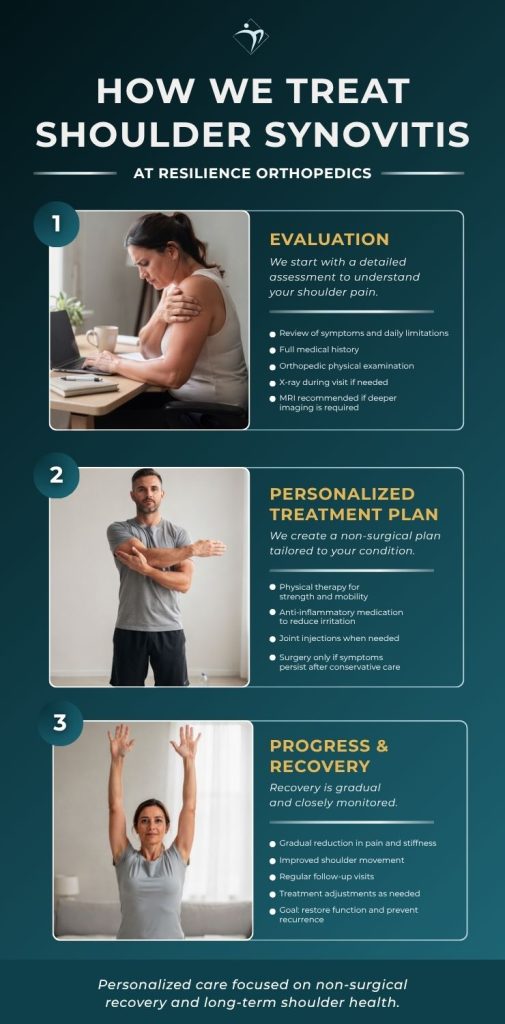
Evaluation
Your care begins with a detailed evaluation. We review your symptoms, how they affect your daily life, and your medical history, followed by a thorough examination.
Dr. Pamela Mehta and her team usually obtain an X-ray during your visit unless you already have recent imaging. If we need a clearer view of the joint, an MRI may be recommended.
Personalized Treatment Plan
Once we identify the cause, we create a personalized plan focused on non-surgical care.
This may include:
- Physical therapy to restore strength and mobility
- Anti-inflammatory medications to relieve irritation
- Joint injections, when appropriate, to reduce inflammation. Treatment options may also include hyaluronic acid joint injection to restore natural joint lubrication and reduce inflammatory symptoms.
Most people improve with non-surgical care. If symptoms persist, we may consider arthroscopic surgery as a next step.
Progress
With treatment, most people slowly start to feel better. The pain, swelling, and stiffness ease up, and the shoulder becomes easier to move.
We track your progress through follow-up visits and adjust your plan as needed. The goal is to help you return to normal activities and reduce the risk of recurrence. We stay involved throughout your recovery.
Why Choose Resilience Orthopedics for Shoulder Synovitis Treatment
- Personalized Care: Dr. Mehta tailors your treatment to you and your needs. We focus on non-surgical options whenever they are safe and effective.
- Getting the right diagnosis: We carry out a thorough assessment and use detailed scans to find the exact cause of your pain, so we can plan the best treatment for you.
- Easy Access to Care: With locations in Los Gatos and San Jose, care is convenient and accessible. Our goal is to help you move with ease, feel better, and return to the activities that matter to you.
- Continuity with one physician: We always include 90 days of post-surgery support. This includes follow-up visits with Dr. Mehta, in-office recovery appointments, and any post-operative imaging – with no additional visit charges during this period.
FAQs
What Happens Next?
After you book your consultation, Dr. Mehta will evaluate your shoulder, review any imaging, and walk you through a treatment plan built around your symptoms and your goals. You’ll leave with a clear understanding of what’s causing the pain, what the recommended next steps are, and what they’ll cost — and you decide how to move forward.
What is the Fastest Way to Heal Shoulder Synovitis?
The fastest way is to reduce inflammation early with rest, activity changes, and guided physical therapy. Anti-inflammatory medication or injections may also help. A structured treatment plan supports faster, more consistent recovery.
What is the Difference Between Shoulder Bursitis and Synovitis?
Synovitis affects the lining inside the joint, while bursitis affects the fluid-filled sacs that cushion the shoulder. They can feel similar, but they affect different structures and may require different treatments.
How Long Until Shoulder Synovitis Goes Away?
Mild cases often improve within a few weeks. More persistent cases may take a few months. Recovery depends on the cause and how consistently you follow your treatment plan.
Does Shoulder Synovitis Require Surgery?
No. Most cases improve without surgery. Surgery is only considered if symptoms persist despite non-surgical treatment or if another issue is contributing.