
Table of Contents
Knee pain can begin gradually or after an injury, but once it sets in, it’s hard to ignore. Walking, bending, or standing can start to feel uncomfortable and take more effort than they should.
Over time, it can affect your routine and limit your movement. One common cause is knee synovitis, an inflammation of the joint lining.
At Resilience Orthopedics, we focus on identifying what’s causing your pain and guiding you toward the right treatment for your situation. Addressing it early can help prevent knee synovitis from getting worse.
Book a Consultation with Dr. Pamela Mehta, MD
The Best Orthopedic Surgeon in San Jose
Dr. Mehta is a board-certified orthopedic surgeon who can help you recover from your joint condition. If you:
- Are Suffering From Pain and Mobility Issues
- Need Orthopedic Assessment and Advice
- Want Treatment From a Top Orthopedic Doctor
We Can Help
What is Knee Synovitis?
Knee synovitis is the inflammation of the synovial membrane, the soft tissue that lines and lubricates the knee joint. When this lining becomes irritated, it may produce excess fluid, leading to swelling and discomfort.
It may develop after an injury, alongside conditions like arthritis, or in association with cartilage conditions such as chondromalacia patella, where synovial inflammation often accompanies cartilage irritation. As it progresses, it can affect how smoothly the knee moves and how much weight it can support.
Common symptoms include:
- Pain during movement or weight-bearing
- Swelling or a feeling of pressure in the joint
- Stiffness or reduced range of motion
- Tenderness around the knee
Even mild cases can make daily activities more difficult, but appropriate care can help restore comfort and mobility. In some cases, chronic inflammation may lead to knee arthrofibrosis, where scar tissue restricts joint movement, particularly after surgery or prolonged immobilization.

What Causes Knee Synovitis?
Knee synovitis develops when the joint lining is irritated by stress, injury, or underlying conditions.
Common causes include:
- Repetitive movements such as running, squatting, or kneeling
- Sudden injuries, including falls or twisting motions, knee sprains that damage ligaments and trigger inflammatory responses.
- Cartilage and bone conditions like osteochondritis dissecans
- Osteoarthritis or rheumatoid arthritis
- Muscle imbalances or poor movement patterns
- Physical strain from work or daily activity
Athletes, active individuals, and those who frequently bend, lift, or stand for long periods may be at higher risk.

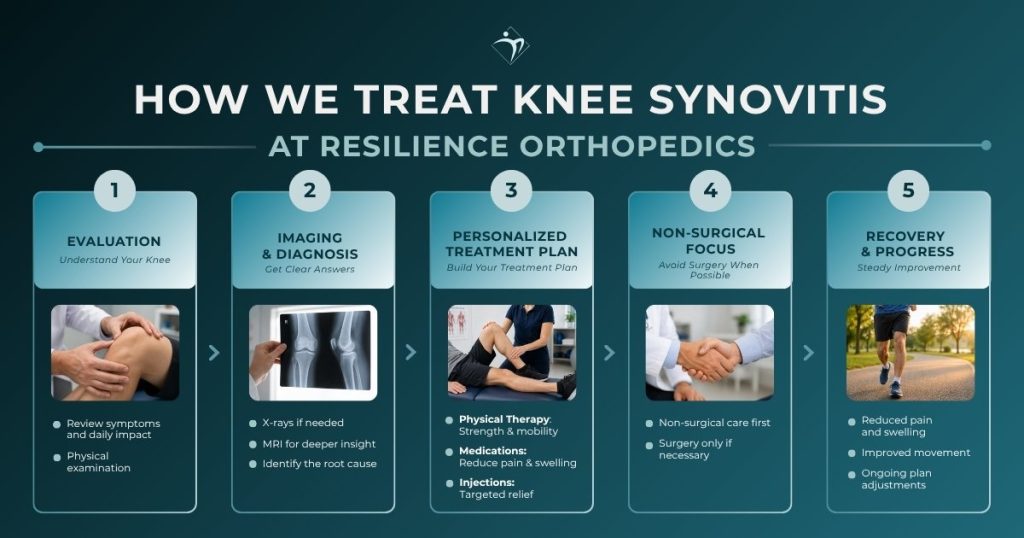
How We Treat Knee Synovitis at Resilience Orthopedics
At Resilience Orthopedics, your care begins with a thorough evaluation. During your first visit, we’ll talk through your symptoms and how they affect your daily life.
After that, we’ll:
- Perform a detailed physical examination
- Review or take X-rays (if recent imaging isn’t available)
- Recommend an MRI if a closer look at the joint is needed
Once we identify the cause, we create a treatment plan tailored to your needs. We prioritize non-surgical care whenever possible, reserving surgery only when necessary.
Your treatment plan may include:
- Physical therapy to improve strength and mobility
- Anti-inflammatory medications to reduce pain and swelling
- Joint injections, when appropriate, including PRP therapy, which uses your body’s own platelets to support natural healing and reduce inflammation.
With Dr. Mehta’s care, you can expect gradual improvement in pain, swelling, and movement. She adjusts your treatment plan as you recover to support steady progress. The goal is to help you move comfortably again and return to your normal routine.
Why Choose Resilience Orthopedics for Knee Synovitis Treatment
Orthopedic-led care: Dr. Pamela Mehta is a board-certified orthopedic specialist with 20 years of experience. She tailors your treatment to your symptoms, routine, and recovery goals.
Conservative treatment approach: We prioritize non-surgical care whenever possible, focusing on reducing pain, improving movement, and supporting long-term joint health.
Clear diagnosis: Our approach combines a detailed assessment with advanced imaging, including X-rays and MRI when needed, to ensure an accurate diagnosis.
Local care: We serve patients in Los Gatos and San Jose, focusing on helping you recover comfortably.
FAQs
Does Knee Synovitis Require Surgery?
Most cases do not require surgery. Knee synovitis is typically treated with non-surgical options such as physical therapy, anti-inflammatory medications, and sometimes joint injections.
Surgery is only considered if symptoms persist despite conservative treatment or if an underlying structural issue contributes to the inflammation.
How Long Does Recovery Take?
Recovery varies based on the severity and cause of inflammation. Mild cases may improve within a few weeks, while more persistent cases can take several months. Consistent physical therapy, activity modification, and conservative treatment all support better recovery.
When Should I See a Doctor for Knee Pain?
Visit your doctor if knee pain persists, worsens, or limits daily activities. Swelling, stiffness, or difficulty walking may indicate conditions like knee synovitis.
Early evaluation allows for accurate diagnosis and a personalized plan to reduce pain and restore mobility.