


Table of Contents
Sharp pain on the outside of the knee is a common sign of iliotibial band syndrome (ITBS), especially for runners and cyclists in Los Gatos and the Bay Area.
This overuse injury affects the iliotibial band, a thick band of connective tissue that runs from the hip to the knee. When irritated, it can cause pain, tightness, and limited movement.
IT band syndrome can make activities like running, hiking, cycling, or even long walks uncomfortable when left untreated.
Early, targeted treatment can help relieve pain, restore movement, and prevent the condition from becoming chronic.
Book a Consultation with Dr. Pamela Mehta, MD
The Best Orthopedic Surgeon in San Jose
Dr. Mehta is a board-certified orthopedic surgeon who can help you recover from your joint condition. If you:
- Are Suffering From Pain and Mobility Issues
- Need Orthopedic Assessment and Advice
- Want Treatment From a Top Orthopedic Doctor
We Can Help
What Causes IT Band Syndrome?
Some of the common causes and risk factors of ITBS include:
- Repetitive movement from running or cycling
- Tight hip, glute, or thigh muscles
- Sudden increase in training distance or intensity
- Poor footwear or worn athletic footwear
- Improper bike fit
- Running on uneven or sloped surfaces

What are the Symptoms of IT Band Syndrome?
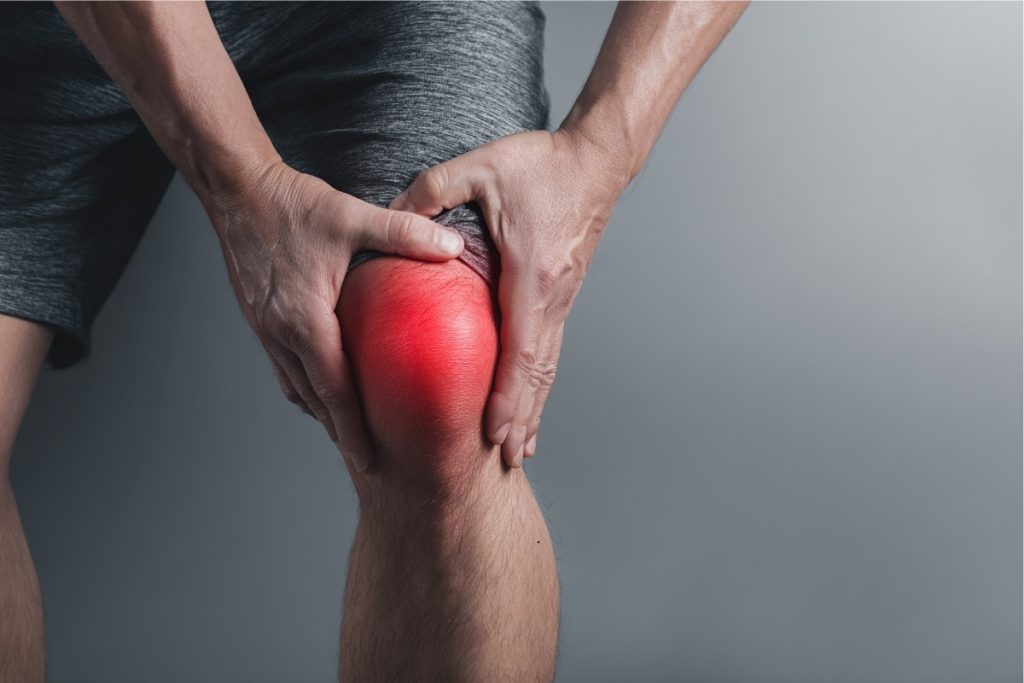
Symptoms often begin gradually and may be easy to ignore at first. A sharp or burning pain on the outside of the knee may appear during activity and ease with rest.
Over time, symptoms can become more frequent and persistent. Here are some of the most common signs:
- Pain or tenderness along the outer knee
- Swelling in the affected area
- A clicking or popping sensation when bending the knee
- Pain that worsens with repetitive movements, such as going downstairs
- Stiffness, especially after periods of rest
How Do We Diagnose IT Band Syndrome?
Dr. Pamela Mehta works with you to understand exactly where it hurts, how your knee pain started, and what makes it worse, so your care is tailored to you.
Your visit will include:
- A review of your symptoms, training habits, and daily activities
- A hands-on exam of your knee, hip, and leg alignment
- Gait and flexibility checks to identify muscle imbalances
- Imaging, such as X-rays or MRI, to rule out other causes, like an MCL or ACL tear
How Do We Treat IT Band Syndrome?
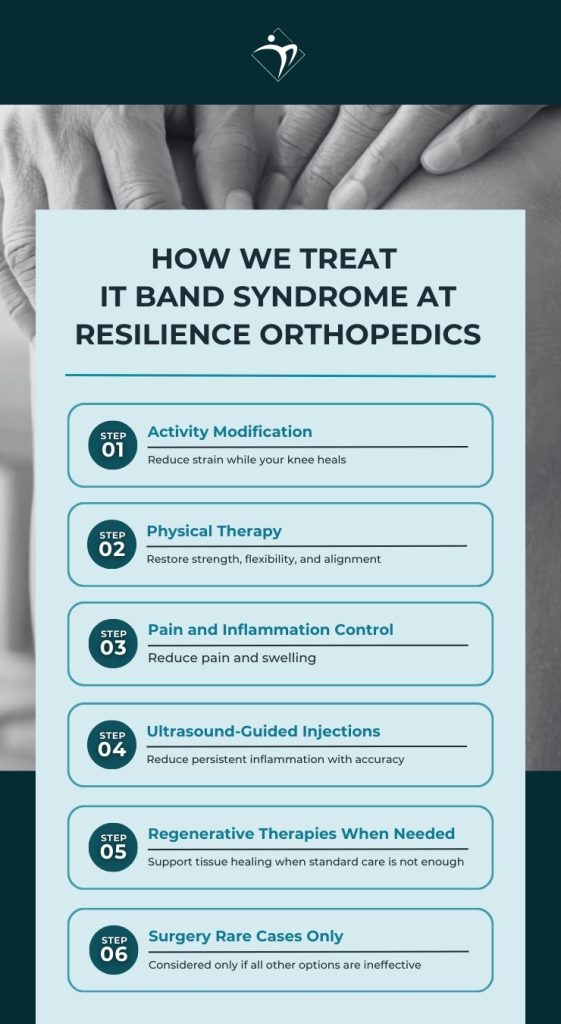
Dr. Mehta develops a personalized approach focused on healing, with surgery considered only if other options aren’t effective.
Your plan may include:
- Activity adjustments to reduce strain while you heal
- Targeted physical therapy to restore strength, flexibility, and balance
- Anti-inflammatory medications to reduce your pain and swelling
- Ultrasound-guided injections to reduce persistent inflammation
- Regenerative treatments like platelet-rich plasma (PRP) are used when tissue support is needed
- Knee replacement surgery is only considered in rare, severe cases
Why Choose Resilience Orthopedics for IT Band Syndrome Treatment?
You shouldn’t have to live with knee pain. At Resilience Orthopedics, your care starts with listening and is built around your goals and lifestyle.
Dr. Pamela Mehta specializes in minimally invasive orthopedic care, exploring every option before surgery is considered. Patients in Los Gatos and the South Bay can get expert care close to home.
Schedule a one-on-one consultation to understand what’s causing your pain and start moving comfortably again.
FAQs
Most people start feeling better once the irritation reduces with rest, ice, or over-the-counter pain relief. Real, lasting progress happens when your doctor identifies the cause and addresses it, helping prevent the pain from returning.
In many cases, yes, but not in the same way. Certain movements can aggravate the IT band. At Resilience Orthopedics, we help you adjust your routine so you can stay active while allowing your knee to heal.
Recovery varies for each person. Most patients notice steady improvement within four to eight weeks once a targeted treatment plan begins.