


Table of Contents
Hip pain can make sports, workouts, and everyday movements more difficult. You may notice it during activity or when doing things you normally enjoy.
For many athletes and active adults, these symptoms can be caused by hip impingement, a condition where the hip joint does not move as smoothly as it should. Without treatment, it may lead to cartilage damage or hip labral tears.
At Resilience Orthopedics, Dr. Pamela Mehta provides hip impingement treatment to help you find relief and get back to moving comfortably.
Book a Consultation with Dr. Pamela Mehta, MD
The Best Orthopedic Surgeon in San Jose
Dr. Mehta is a board-certified orthopedic surgeon who can help you recover from your joint condition. If you:
- Are Suffering From Pain and Mobility Issues
- Need Orthopedic Assessment and Advice
- Want Treatment From a Top Orthopedic Doctor
We Can Help
What is Hip Impingement (FAI)
Hip impingement, also called femoroacetabular impingement (FAI), can cause hip pain, stiffness, and a pinching feeling with movement.
It happens when the ball and socket of the hip joint don’t move smoothly together, causing them to rub and irritate the joint.
There are three types of hip impingement:
- Cam impingement: Extra bone forms on the ball of the hip joint.
- Pincer impingement: Extra bone forms around the socket.
- Combined impingement: A combination of both types.
Hip impingement can develop from differences in hip shape, the way the joint grows, or repeated stress from sports and other activities.

Symptoms
Common symptoms of FAI include:
- Hip or groin pain, especially during activity
- Stiffness or tightness
- Clicking, popping, or catching sensations
- Limited range of motion
- Pain after sitting for long periods
- Difficulty with stairs, hills, or certain movements
- A feeling that the hip is stuck or not moving smoothly
Symptoms often develop gradually and may worsen over time. Getting checked early can help you understand what’s causing your pain and find the right care to support your hip health.
How We Treat Hip Impingement at Resilience Orthopedics
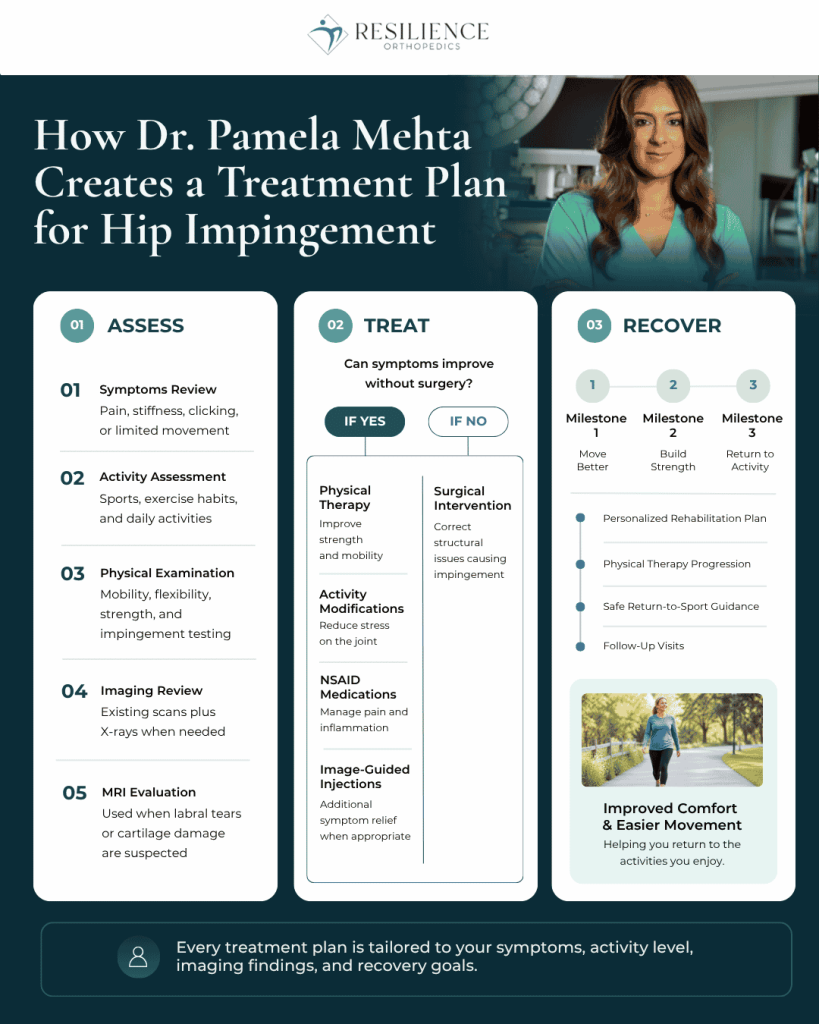
At Resilience Orthopedics, Dr. Mehta reviews your symptoms, activity level, and hip condition to determine the right treatment approach.
Initial Evaluation
During your first visit, Dr. Mehta will:
- Discuss your symptoms and how they affect your daily activities.
- Check your hip’s range of motion, flexibility, and strength.
- Perform a physical exam to look for signs of hip impingement.
- Review existing imaging and order X-rays if needed.
- Recommend an MRI if a labral tear, cartilage damage, or other joint issue is suspected.

Treatment Plan
Dr. Mehta begins with non-surgical treatments whenever appropriate:
- Physical therapy to improve hip strength and movement
- Activity adjustments to reduce stress on the hip joint
- Anti-inflammatory medications (NSAIDs) to manage pain and inflammation
- Image-guided injections, when appropriate, for symptom relief
When symptoms continue despite non-surgical care, or there is significant joint damage, hip arthroscopy may be recommended.
Recovery and Follow-Up
Recovery depends on the severity of your hip impingement and the treatment you need.
Some people improve within weeks with therapy and activity changes, while recovery after surgery may take several months.
Your recovery plan may include:
- Physical therapy to improve strength and mobility
- Guidance for returning to activities safely
- Follow-up visits to monitor progress
Many people notice improved comfort and easier movement as they recover.

Why Choose Resilience Orthopedics for Hip Impingement Treatment
Here is what you can expect at Resilience Orthopedics:
- Orthopedic-led care: Evaluation and care from Dr. Mehta, a hip specialist.
- Personalized treatment: Treatment based on your symptoms and activity goals.
- Care for active patients: Support for returning to sports and daily activities.
- Convenient locations: Specialized hip care in Los Gatos and San Jose.
FAQs
What Does Hip Impingement Feel Like?
Hip impingement can feel like a deep ache or pinching pain in the front of your hip or groin. You may notice it more with squatting, bending, twisting, or sitting for a long time. Stiffness, clicking, or a feeling that your hip is catching can also occur.
Can Hip Impingement Heal Without Surgery?
Many people find relief without surgery. Physical therapy, activity changes, and medications can help reduce pain and improve movement. Dr. Mehta will recommend treatment based on your symptoms and how your hip is affected.
What Happens if Hip Impingement is Untreated?
Ignoring hip pain can cause joint irritation to persist. Over time, symptoms may worsen, leading to cartilage wear or labral tears. Getting an evaluation can help you understand what’s happening and what steps you should take next.