

Table of Contents
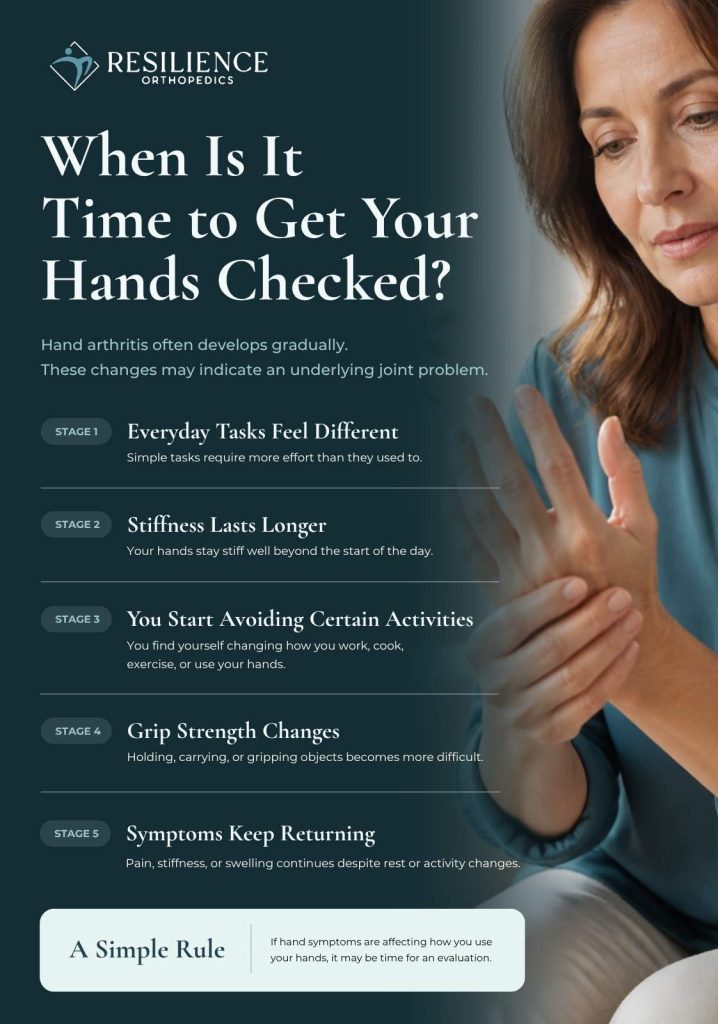
Do your hands feel stiff in the morning, ache during daily tasks, or feel weaker when gripping things? Activities like opening jars, typing, cooking, or carrying groceries may not feel as easy as they once did.
These changes may be signs of hand arthritis. It’s a common cause of hand pain, stiffness, and reduced grip strength, especially in adults over 40, people with repetitive hand use, and those with previous hand injuries.
At Resilience Orthopedics, Dr. Pamela Mehta helps identify the cause of your hand pain and create a plan to improve comfort and function.
Book a Consultation with Dr. Pamela Mehta, MD
The Best Orthopedic Surgeon in San Jose
Dr. Mehta is a board-certified orthopedic surgeon who can help you recover from your joint condition. If you:
- Are Suffering From Pain and Mobility Issues
- Need Orthopedic Assessment and Advice
- Want Treatment From a Top Orthopedic Doctor
We Can Help
What is Hand Osteoarthritis?
Hand osteoarthritis occurs when the cartilage that cushions your finger and thumb joints wears down over time. This can lead to pain, stiffness, and difficulty with everyday movements.
It commonly affects:
- Finger joints near the fingertips
- Middle finger joints
- The base of the thumb
Hand osteoarthritis may develop with age, but hand injuries, repetitive use, and genetics can also play a role.
Symptoms
Symptoms often develop gradually and may include:
- Joint pain and stiffness
- Swelling or tenderness
- Weaker grip
- Reduced finger or thumb movement
- Bony bumps around the joints
Because other conditions can cause similar symptoms, an evaluation can help identify the cause of your hand pain.
How We Treat Hand Arthritis at Resilience Orthopedics
Hand arthritis should not force you to put everyday life on hold. At Resilience Orthopedics, Dr. Mehta focuses on finding the cause of your symptoms and creating a personalized treatment plan.
First Appointment
During your first visit, Dr. Mehta will:
- Review your symptoms, daily activities, and how hand pain affects your routine.
- Examine joint movement, tenderness, grip strength, and hand function.
- Use X-rays to evaluate the joints and rule out other causes.
- Recommend additional imaging or testing if needed.

Personalized Treatment Plan
Treatment often begins with non-surgical options, including:
- Splinting or bracing to support painful joints.
- Hand therapy to improve movement and strength.
- Activity changes to reduce strain.
- Medication or injections to manage pain and inflammation.
If hand pain continues to affect your routine, Dr. Mehta will help you understand whether surgery is right for you. Surgical options may include:

Recovery and Rehabilitation
Recovery looks different for everyone. Some people improve with splinting, activity changes, and hand therapy. If surgery is needed, recovery may take several weeks to a few months.
Hand therapy helps improve movement and strength so you can use your hand comfortably.
Why Choose Resilience Orthopedics for Hand Arthritis Treatment
Dr. Pamela Mehta provides expert orthopedic care to help you manage hand arthritis. Here’s what you can expect:
- Your plan is based on your daily routine, work, and activity level.
- A detailed exam and imaging, when needed, to understand your condition.
- Experience treating active adults and managing long-term joint conditions.
- Regular follow-ups and support close to home in Los Gatos and San Jose.
FAQs
What Does Hand Arthritis Feel Like?
Hand arthritis can cause stiffness, aching, or soreness in the fingers or thumb. You may notice it more in the morning or after using your hands for a long time.
Can Hand Arthritis Be Treated Without Surgery?
Yes. Many people manage hand arthritis without surgery. Treatment may include splinting, hand therapy, activity changes, medication, or injections to help reduce symptoms and improve hand use.
What Happens If Hand Arthritis Is Untreated?
Over time, hand arthritis can make movement more difficult and affect your grip. Knowing what is happening in your joints is the first step toward managing your symptoms.





