

Table of Contents
That ache in your hip after a hike or a round of golf isn’t something to ignore. It’s your body’s way of telling you that something is not right. When it is brushed off for too long, it can start to limit how you move and slowly change the way you live your life.
At Resilience Orthopedics in Los Gatos, we help you get to the bottom of that pain. Dr. Pamela Mehta evaluates your joint and guides you back to moving comfortably.
Book a Consultation with Dr. Pamela Mehta, MD
The Best Orthopedic Surgeon in San Jose
Dr. Mehta is a board-certified orthopedic surgeon who can help you recover from your joint condition. If you:
- Are Suffering From Pain and Mobility Issues
- Need Orthopedic Assessment and Advice
- Want Treatment From a Top Orthopedic Doctor
We Can Help
What is Hip Arthritis?
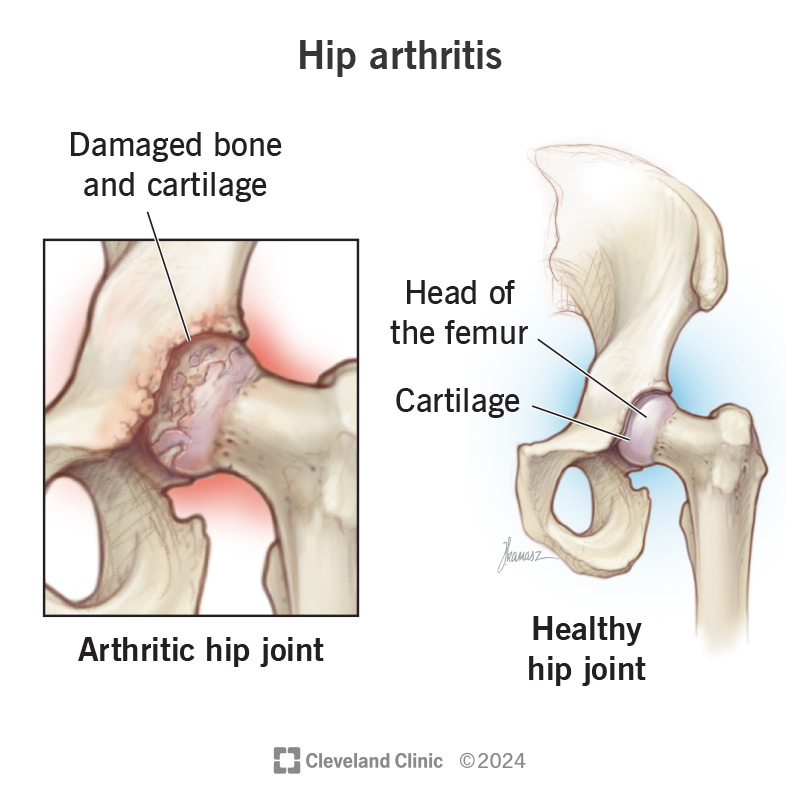
Hip arthritis is a condition where the cartilage that cushions your hip joint gradually breaks down. Over time, the smooth protective surface on the ends of your bones wears away.
As the cartilage breaks down, the bones start to rub against each other. This leads to pain, stiffness, and swelling, and can make everyday movements like walking, bending, or standing difficult over time.
What Causes Hip Arthritis?
Hip arthritis usually develops over time due to the following factors:
- Natural aging and gradual cartilage wear
- Repetitive high-impact activities such as running, jumping, sports, or construction work
- Previous hip injuries or trauma, including fractures, dislocations, or ligament tears
- Poor joint alignment or biomechanics
- Excess body weight
- A sedentary lifestyle
What are the Symptoms of Hip Arthritis?
You may notice:
- Pain in the groin, front of the thigh, or buttocks
- Stiffness, especially in the morning or after sitting for a while
- Reduced range of motion
- A grinding or rubbing sensation in the joint when you move
- Limping
- Pain that worsens with activity
- Difficulty walking or climbing stairs
We help you understand what is going on in your hip and explore your treatment options.
Diagnosis and Treatment at Resilience Orthopedics
At Resilience Orthopedics, we start by understanding your day-to-day experience, what movements cause pain, what you have had to give up, and what you want to return to.
Dr. Mehta uses this to guide your care. Treatment is focused on helping you return to the activities that matter to you.
How Do We Diagnose Hip Arthritis?
Dr. Mehta watches how you move and examines your hip to identify the source of your pain. Your evaluation may include:
- Physical exam to assess your range of motion, tenderness, and walking pattern.
- X-ray to evaluate changes in joint space, the presence of bone spurs, and the overall structure of the hip.
- Advanced imaging (MRI) to assess soft tissues such as cartilage, the labrum, and tendons.

How Do We Treat Hip Arthritis?
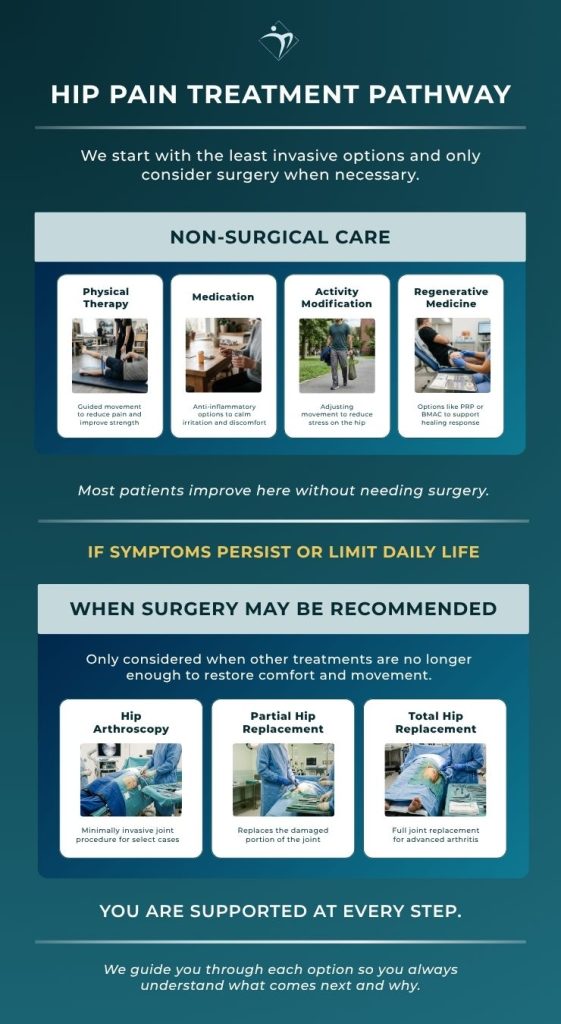
Treatment always starts with the least invasive options. Many people are able to improve their pain and movement without surgery.
Non-surgical treatments may include:
- Physical therapy and targeted exercises
- Anti-inflammatory medications
- Activity modification
- Regenerative medicine treatments

If surgery is needed, the recommendation depends on your condition and what you want to get back to. Options may include:
- Hip arthroscopy
- Partial hip replacement
- Total hip replacement
Surgery is never the first step. It is considered only when it is truly necessary and when pain is taking more from your life than recovery would require.
Our team will support and guide you through each step so nothing feels unclear or overwhelming.
What are the Risks of Hip Surgery?
Hip surgery is generally safe, but like any procedure, it carries some risks, including:
- Bleeding
- Infection
- Blood clots or deep vein thrombosis (DVT)
- Implant wear
- Damage to nearby nerves
- Leg length difference
- Stiffness after surgery
- Fracture
While these risks are real, modern hip replacements have high success rates, often above 85% over 20 years.
Will I Recover from Hip Arthritis?
There is no cure for hip arthritis, but you can get back to a more comfortable, active life with the right treatment.
Your recovery depends on your condition and the treatment:
- Non-surgical treatment: You may notice improvement within a few weeks to a few months. The goal is to reduce pain and make daily movement easier and more comfortable.
- Surgery: Recovery takes longer, but most people are driving within four to six weeks and returning to low-impact activities soon after. By three to six months, most strength and movement has returned.
How Can I Prevent Hip Arthritis?
You cannot prevent every case of hip arthritis, but you can lower your risk and slow progression by:
- Maintaining a healthy weight to reduce stress on your hips.
- Staying active with low-impact exercise like walking, swimming, or cycling.
- Strengthening the muscles that support your hip.
- Avoiding repeated strain on the joint.
- Treating minor hip injuries early before they worsen.
FAQs
Can Exercise Help Hip Arthritis?
Yes, targeted exercises for hip arthritis can improve flexibility, reduce stiffness, and strengthen the muscles that support your joint. When these muscles are stronger, they take more of the load off the joint, which can ease discomfort.
Can Hip Arthritis Be Treated Without Surgery?
Absolutely. Most people manage hip arthritis without surgery for years, and often without needing surgery at all.
Treatments like physical therapy, lifestyle changes, and regenerative options such as PRP and BMAC can all help manage symptoms and slow progression.
At Resilience Orthopedics, we walk you through the non-surgical options that may help you before considering surgery.
When Should I See a Specialist for Hip Pain in Los Gatos?
You should consider seeing a specialist when hip pain starts to change the way you live. This may look like avoiding stairs, skipping walks, or having trouble sleeping because of discomfort.
You do not need to wait until the pain is severe. Early evaluation often means more treatment options and a better chance of getting back to the activities you enjoy sooner.