


Table of Contents
A swollen lump at the tip of your elbow can appear almost overnight. The skin there is loose, so fluid often builds up before you notice anything is wrong. Pain tends to arrive second – when you lean on a desk, or bend your arm all the way.
Most elbow bursitis settles down with the right care. But an elbow that turns red, feels warm, or comes with a fever is a different problem, and it needs attention the same day.
At Resilience Orthopedics, Dr. Pamela Mehta works out which one you have and treats it properly the first time.
Book a Consultation with Dr. Pamela Mehta, MD
The Best Orthopedic Surgeon in San Jose
Dr. Mehta is a board-certified orthopedic surgeon who can help you recover from your joint condition. If you:
- Are Suffering From Pain and Mobility Issues
- Need Orthopedic Assessment and Advice
- Want Treatment From a Top Orthopedic Doctor
We Can Help
What is Elbow Bursitis?
Elbow bursitis, also called olecranon bursitis, happens when the small fluid-filled sac cushioning the bony tip of your elbow becomes irritated and fills with fluid.
It usually comes from one of the following:
- A fall or a direct blow to the point of the elbow
- Leaning on hard surfaces for long stretches – desks, workbenches, car doors
- Work that involves crawling or resting on the elbows, such as plumbing or flooring
- A cut, scrape, or puncture that lets bacteria into the bursa
- Gout or rheumatoid arthritis
Swelling is almost always the first sign. Pain often follows, and is usually worse when you bend the elbow fully or press on it. Some people have a noticeable lump and very little pain at all, which is part of why the condition gets left too long.
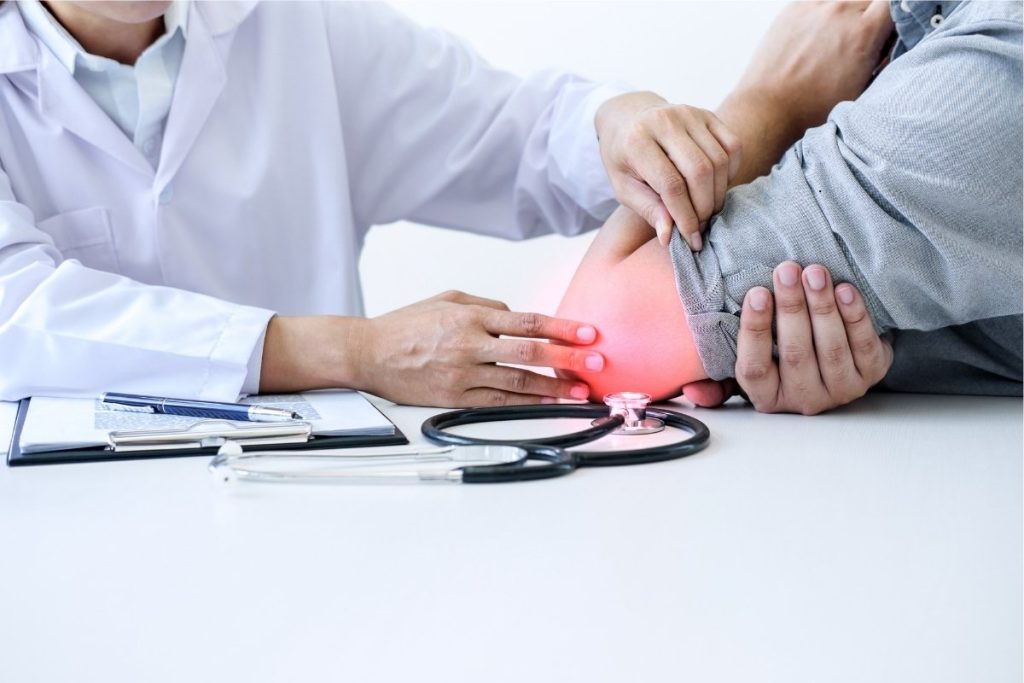
When a Swollen Elbow Needs Same-Day Care
Most cases of elbow bursitis are not infected. When they are, waiting is the wrong move.
Get seen straight away if you notice:
- Redness spreading across or beyond the elbow
- Warmth when you touch the skin
- Fever, chills, or feeling generally unwell
- Pain that is getting worse quickly rather than settling
- Any recent cut, scrape, or puncture near the swelling
Infected bursitis needs antibiotics, and usually drainage. Left alone, the infection can spread into the surrounding tissue or into the bloodstream.
How We Treat Elbow Bursitis at Resilience Orthopedics
Your First Appointment
Dr. Mehta will ask how the swelling started, whether you’ve taken a knock to the elbow, and what your work and daily routine involve. Pressure-related bursitis usually traces back to something specific, and finding it is half the treatment.
She will examine the elbow for warmth, redness, and how far it bends. An X-ray may be used to rule out a fracture or a bone spur. If there’s any suspicion of infection, fluid is drawn and tested rather than guessed at.
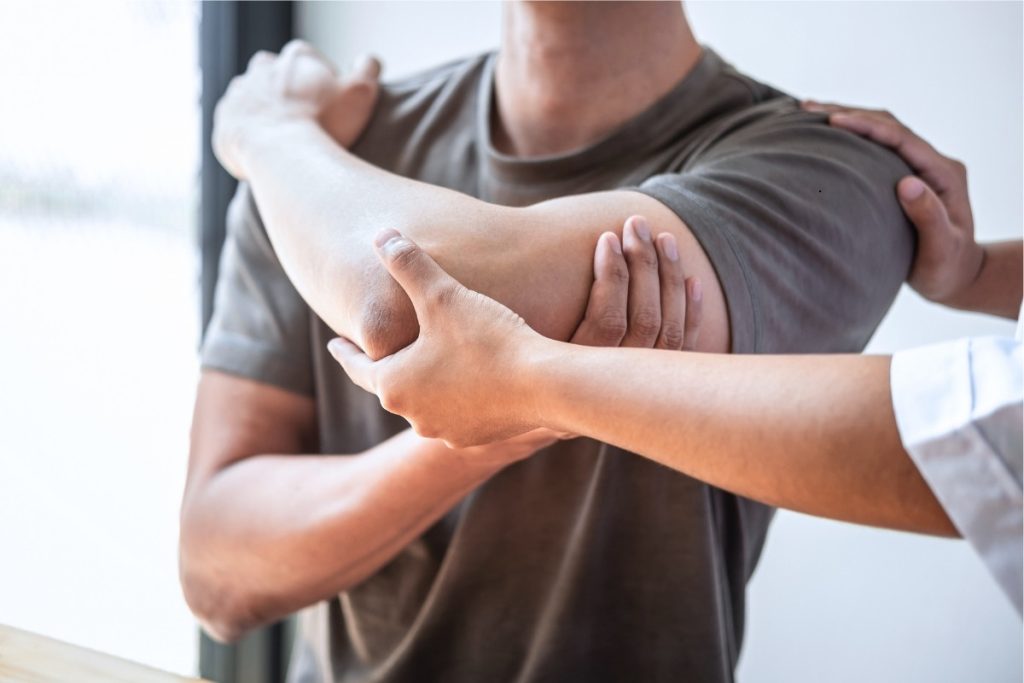
Your Personalized Treatment Plan
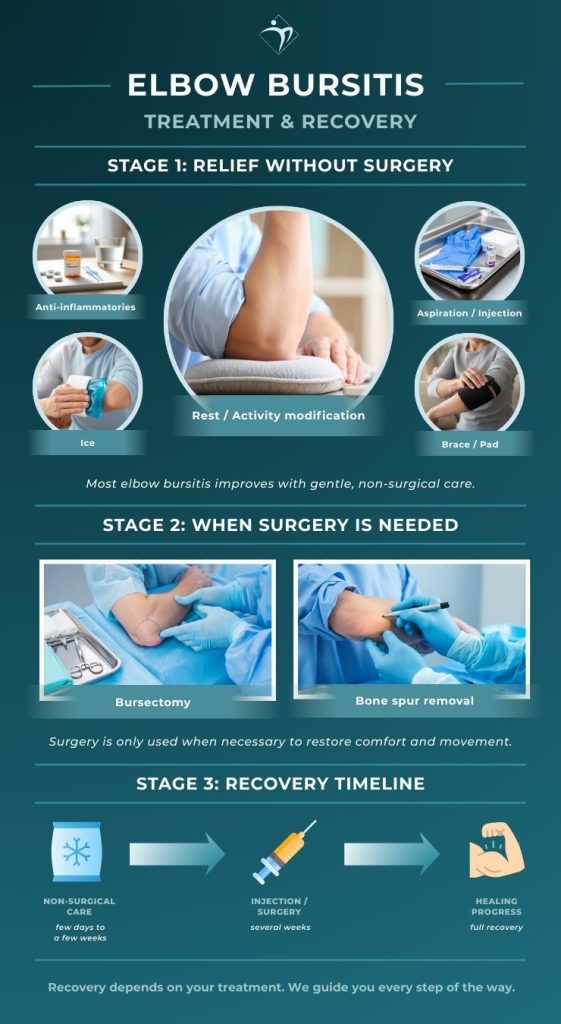
Most people never need surgery. Treatment usually involves some combination of:
- Taking pressure off the elbow, including padding for work and sleep
- Compression to bring the swelling down
- Anti-inflammatory medication
- Draining the bursa in clinic when the swelling is large or uncomfortable
- Antibiotics where infection is confirmed
Dr. Mehta only recommends removing the bursa when swelling keeps coming back despite treatment, or when an infection won’t clear.
Recovery and Rehabilitation
Most non-infected cases settle within three to six weeks, once the pressure on the elbow is genuinely removed. That last part matters – bursitis that keeps returning is usually bursitis where the cause was never addressed.
Chronic cases take longer and need that underlying trigger sorted out, whether it’s a work setup, a sport, or an unrelated condition like gout. If the bursa is removed surgically, a healthy one typically regrows over several months.
Why Choose Resilience Orthopedics for Elbow Bursitis Treatment
- The same surgeon throughout. Dr. Mehta sees you from your first visit through to recovery.
- Accurate diagnosis. Telling infected bursitis from the ordinary kind changes the entire treatment. We test rather than assume.
- Answers the same day. You leave knowing what you have, what happens next, and what it will cost.
- Conservative care first. Padding, compression, and drainage before anything surgical is discussed.
FAQs
Can I Drain My Elbow Bursitis at Home?
No. Draining it yourself risks pushing bacteria into a space that is genuinely difficult to clear once infected — and an infected bursa is a far bigger problem than a swollen one. Aspiration in clinic is sterile, takes minutes, and the fluid can be tested to confirm whether infection is present.
How Long Does Elbow Bursitis Take to Go Away?
Most non-infected cases improve within three to six weeks with padding, compression, and changes to whatever was putting pressure on the elbow. Recurrent bursitis takes longer, and usually means the original cause is still there.
Does Elbow Bursitis Need Surgery?
Rarely. Surgery is considered when the swelling keeps returning despite proper treatment, or when an infection doesn’t respond to antibiotics and drainage.
What Does Elbow Bursitis Feel Like?
Usually a soft, swollen lump at the point of the elbow. It’s often tender when you lean on it and uncomfortable at full bend. Redness and warmth point towards infection and should be looked at the same day.