


Table of Contents
Tingling or numbness in your ring and little fingers is often a sign that the ulnar nerve at the elbow is being compressed in a space called the cubital tunnel.
When this nerve is irritated or compressed, you may also notice hand weakness or a “falling asleep” sensation, especially when your elbow is bent for long periods. This can make everyday tasks such as holding your phone or carrying groceries more difficult.
At Resilience Orthopedics, Dr. Pamela Mehta evaluates your symptoms and creates a treatment plan focused on relieving pressure on the nerve and improving hand function.
Book a Consultation with Dr. Pamela Mehta, MD
The Best Orthopedic Surgeon in San Jose
Dr. Mehta is a board-certified orthopedic surgeon who can help you recover from your joint condition. If you:
- Are Suffering From Pain and Mobility Issues
- Need Orthopedic Assessment and Advice
- Want Treatment From a Top Orthopedic Doctor
We Can Help
What are the Causes and Symptoms of Cubital Tunnel Syndrome?
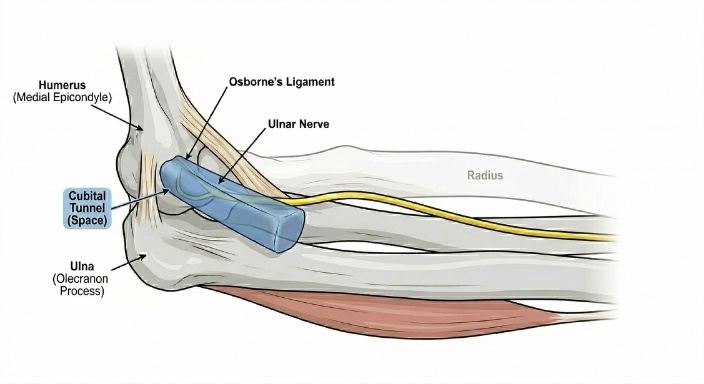
Cubital tunnel syndrome develops when the ulnar nerve is compressed or irritated at the elbow, often due to repeated bending or prolonged pressure.
Common causes include:
- Resting on your elbows for long periods
- Direct impact on the inner elbow
- Inflammation around the nerve
- Arthritis or bone spurs
- Prior elbow injury (fracture or dislocation)
- Thickened tissue compressing the nerve
- Ulnar nerve instability (subluxation)
You may notice tingling or numbness in your ring and little fingers, along with weakness in your hand or a weaker grip than usual.

When Should I See a Specialist?
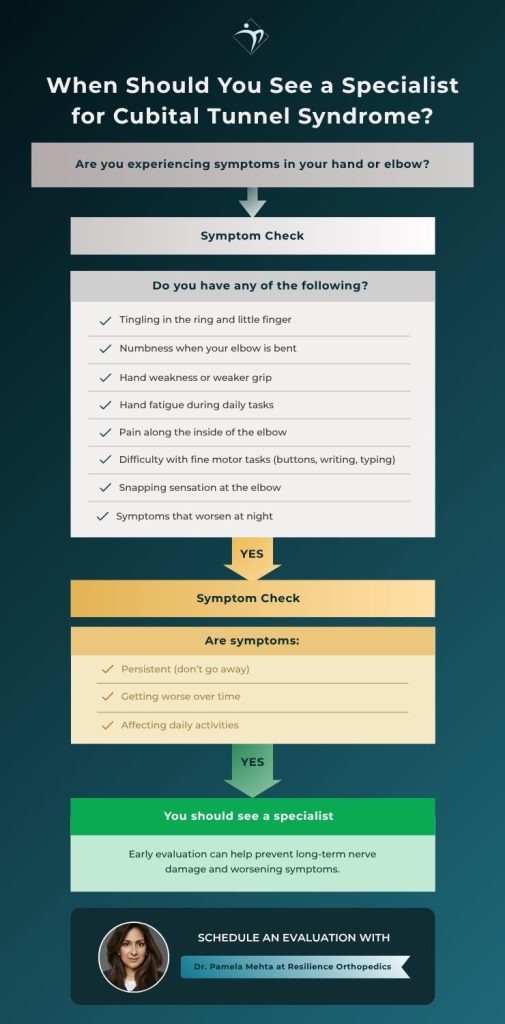
It’s important to consult a specialist if symptoms persist, worsen, or start to impact daily activities.
Common warning signs include:
- Tingling in the ring and little finger
- Numbness when the elbow is bent
- Weak grip strength
- Hand fatigue during daily tasks
- Pain along the inside of the elbow
- Snapping sensation at the elbow
- Symptoms that worsen at night
What Conditions are Linked to the Cubital Tunnel?
Several conditions can involve the cubital tunnel and affect the ulnar nerve.
Cubital Tunnel Syndrome
Cubital tunnel syndrome occurs when the ulnar nerve is compressed or irritated at the elbow. You may notice tingling in the ring and little fingers, hand weakness, or aching along the inside of the elbow.
Symptoms often worsen when the elbow is bent for long periods, such as during sleep or while using your phone. Treatment may include bracing, therapy, or surgery in more advanced cases.
Ulnar Nerve Subluxation
Ulnar nerve subluxation happens when the nerve slips out of place and snaps over the bone at the elbow during movement. You may hear a popping sound when bending the arm.
Over time, this movement can irritate the nerve and lead to numbness, weakness, or discomfort.
Ulnar Nerve Entrapment
This is a general term for pressure on the ulnar nerve near the elbow. It can be caused by tight tissues, swelling, or structural changes that compress the nerve.
Common symptoms include changes in sensation, weaker grip strength, and reduced hand coordination.
How is Cubital Tunnel Syndrome Diagnosed?
At Resilience Orthopedics, diagnosis begins with a detailed review of your symptoms, including when they started, what triggers them, and how they affect your daily life.
We then start with a focused exam that may include, testing sensation and grip strength, elbow movement, and nerve function. Additional tests may include:
- Nerve conduction studies
- Electromyography (EMG)
- Ultrasound imaging
- X-rays, if joint issues are suspected
How Do We Treat Cubital Tunnel Syndrome?
At Resilience Orthopedics, treatment always starts with the least invasive options and is tailored to your symptoms.
Non-surgical treatment may include:
- Activity modification and ergonomic changes
- Night splinting to keep the elbow straight
- Anti-inflammatory medications
- Physical therapy and targeted exercises
- Ulnar nerve glides
- Bracing or padding

If symptoms are more severe or the nerve is more compressed, surgery may be recommended to relieve pressure and protect the nerve. Surgical options include:
- Cubital tunnel release
- Endoscopic decompression
- Ulnar nerve transposition
- Medial epicondylectomy (in some cases)
During your consultation, Dr. Mehta will review your options and guide you toward the most appropriate treatment.

How Long is the Recovery from Cubital Tunnel Conditions?
Recovery depends on the severity of nerve compression and the type of treatment needed. With non-surgical care, you may notice improvement within a few weeks.
Recovery after surgery takes several months as the nerve heals and strength returns. Dr. Mehta will guide your recovery with a plan tailored to your condition and goals.
Cubital Tunnel Syndrome Vs. Carpal Tunnel Syndrome: What are the Differences?
Cubital tunnel and carpal tunnel syndromes affect different nerves, so symptoms show up in different parts of the hand.
| Feature | Cubital Tunnel Syndrome | Carpal Tunnel Syndrome |
| Nerve affected | Ulnar nerve | Median nerve |
| Location | Elbow and ring/little fingers | Wrist and thumb-side of hand |
| Symptoms | Tingling in ring and little fingers, weak grip | Tingling in thumb, index, middle fingers |
| What worsens symptoms | Bent elbow positions | Repetitive wrist use |
If you’re unsure which condition you have, Dr. Mehta can help determine the diagnosis and guide treatment.
FAQs
What is the Fastest Way to Relieve Cubital Tunnel Syndrome?
Early treatment focuses on reducing pressure on the ulnar nerve with night splints, activity changes, and targeted exercises. If symptoms persist, therapy or surgery may be considered.
What Happens if I Ignore Cubital Tunnel Syndrome?
Ongoing compression can worsen over time and may lead to permanent numbness, weakness, or muscle loss in severe cases.
How Do I Know If I Need Cubital Tunnel Release Surgery?
Surgery is considered when non-surgical treatment hasn’t helped after several months or if tests show significant nerve compression. Dr. Mehta can evaluate your condition and guide the next steps.