

Table of Contents
You’ve just had a PRP injection for a joint injury, and now you’re wondering what comes next. How soon can you move normally again? What activities should you avoid?
I often hear these questions from my patients, and I know that having clear answers can make a big difference in your recovery. At Resilience Orthopedics, I guide my patients step by step with clear instructions and a personalized recovery plan.
In this article, I’ll break down the typical timeline after a PRP joint injection and share tips to help you get the best results.
Key Takeaways:
- Most people notice improvements within 6–12 weeks after a PRP injection.
- The exact recovery timelines vary depending on injury type, age, and overall health.
- Gentle movement, following your personalized plan, and healthy habits help your body rebuild tissue and regain strength.
What Happens After a PRP Injection?
After your Platelet-Rich-Plasma (PRP) treatment, your body begins healing right away. You may feel some soreness, swelling, or stiffness around the injection site, which is normal.
That’s a part of your body’s natural repair response as platelets release growth factors to rebuild tissue. You’ll notice week-by-week improvements as your body gradually heals.
Book a Consultation with Dr. Pamela Mehta, MD
The Best Orthopedic Surgeon in San Jose
Dr. Mehta is a board-certified orthopedic surgeon who can help you recover from your joint condition. If you:
- Are Suffering From Pain and Mobility Issues
- Need Orthopedic Assessment and Advice
- Want Treatment From a Top Orthopedic Doctor
We Can Help
Week-By-Week Recovery Timeline
Here’s what you can expect after you get your PRP injection:
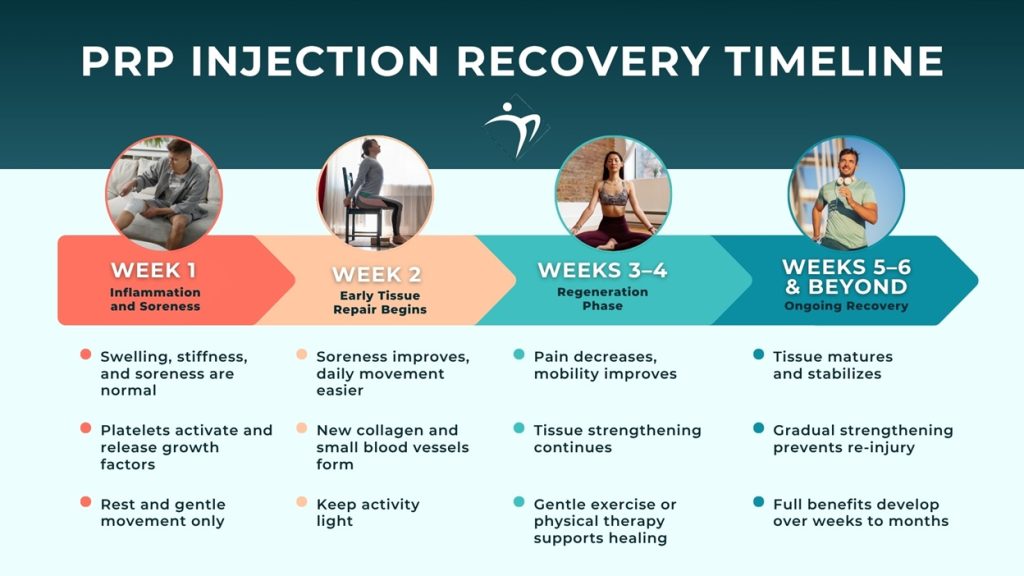
Week 1: Inflammation and Soreness
Swelling, stiffness, and soreness are common as your body responds to the injection.
This discomfort is a sign your platelets are doing their job, recruiting cells to start healing. Rest, avoid intense activity, and follow gentle exercises to support recovery.
Week 2: Early Tissue Repair Begins
By week two, soreness gets better, and daily movement becomes easier. During this stage your body is forming new collagen and small blood vessels, but the area is still sensitive, so keep activity light.
Week 3–4: Regeneration Phase
Around weeks three and four, you’ll likely notice less pain and improved mobility.
Your tissue is strengthening, but it’s not ready for high-impact activity yet. Gentle exercise or physical therapy helps support healing.
Week 5–6 and Beyond: Ongoing Recovery
By weeks five and six, you’ll feel stronger as the tissue matures and stabilizes. Continue to pace yourself, as gradual progress protects your healing tissue and leads to the best long-term results.
Factors That Affect Your Recovery
Every PRP recovery journey is unique and is influenced by factors such as:
The Injection Site
Joint injections often cause mild soreness for a few days, while tendon and ligament injections can be more uncomfortable.
They may cause discomfort that sometimes lasts a week or more, and full healing may take several months due to limited blood flow.
Severity of the Injury
Minor joint pain usually responds quickly as PRP supports the natural healing process. But chronic tendon damage takes longer because the tissue needs to rebuild and strengthen.

Individual Patient Factors
Factors also affect your recovery. These include:
- Age
- Overall health
- Pre-injury fitness
- Lifestyle habits such as smoking
Younger, active people tend to heal faster, while older patients may need more time. Autoimmune conditions, diabetes, or poor circulation can also slow your progress.
Treatment Area
After knee PRP injection, most people feel sore for three to five days, with gradual improvement over the following weeks. Results become more noticeable by six to eight weeks, with full benefits around the three-month mark.
Recovery after shoulder PRP injection tends to take a little longer. It’s common to have mild pain or stiffness for a week or longer, as the deeper tendons take more time to heal. But gradual improvements are usually seen within eight to 12 weeks, and strength continues to build over the next few months.
Activity Level
Too much activity too soon can re-injure tissue. But being inactive can also slow collagen strengthening. Follow your physical therapy routine to stay on track.

How to Support Your Recovery
The days and weeks after your injection play a big role in how well your body heals. Here’s how to support it:
First 48–72 Hours
- Avoid anti-inflammatories like ibuprofen, naproxen, aspirin, and similar drugs—they can interfere with the healing process.
- Apply an ice pack for 15–20 minutes several times a day with a thin cloth between the ice and your skin.
- Avoid heavy lifting and high-impact activity. Gentle movement, like short walks, is fine; stop if it causes pain.

First 2–6 Weeks
During the first two to six weeks after your PRP treatment, your body continues to heal and rebuild new tissue. Follow your prescribed rehabilitation plan, as gentle exercises help stimulate healthy tissue growth and prevent scar formation.
Nourish your recovery with a balanced diet that includes plenty of protein and vitamin C, and stay well hydrated to promote cellular repair.
Lastly, listen to your body. Mild soreness is normal, but if you feel sharp or persistent pain, ease back and give yourself time to recover.
6 Weeks and After
After six weeks, your focus should be on rebuilding strength to support your long-term recovery. Continue working with your physical therapist, who will guide you through exercises that strengthen and organize new tissue for everyday movement.
Eat a healthy balanced diet, rest, manage stress, and stay active with gentle exercises.
When to Call Your Doctor
Most people recover from PRP smoothly, but it’s important to reach out if something feels off. Contact your doctor if you notice:
- Pain that gets worse instead of better after the first few days
- Fever, chills, or redness around the injection site
- Little or no improvement within your expected recovery timeframe
Complications are rare, but choosing a doctor who monitors you closely makes them even less likely. At Resilience Orthopedics, we stay connected throughout your recovery so you’re never on your own.
Why Choose Resilience Orthopedics for PRP Treatment
We understand that each injury and recovery journey is unique, and we are here to guide you every step of the way:
- Expert Care: Dr. Pamela Mehta is a board-certified orthopedic surgeon with sports medicine expertise in treating both simple and complex injuries.
- Regenerative Therapies: We use innovative regenerative therapies like PRP to help your body heal naturally, promoting tissue repair and joint recovery.
- Precision Delivery: At Resilience Orthopedics, advanced imaging helps us deliver PRP injections precisely to the affected area for maximum effectiveness.
- Personalized Recovery Plan: Post-treatment instructions and guidance tailored to your condition and lifestyle.
- Direct Access to Your Doctor: Dr. Mehta is available to answer your questions and support you throughout your recovery.
Get Personalized Guidance for Your Healing
You don’t have to go through your recovery alone. I’ll guide you through what to expect for your specific injury, answer your questions, and provide a clear plan to help you progress safely.
At Resilience Orthopedics, your goals shape your treatment, and I’m here to help you achieve them.
If you’re in San Jose, Santa Clara, Mountain View, or anywhere in the Bay Area, let’s discuss if PRP is the right next step for you. Schedule your consultation today.